


Key Takeaways
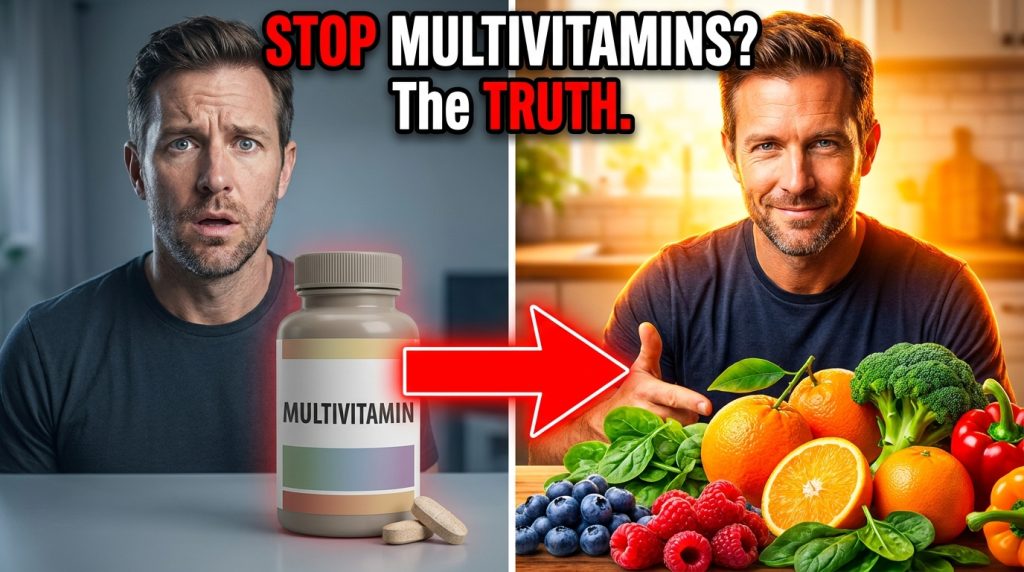
- For most generally healthy men, a multivitamin is best thought of as “nutritional insurance” for likely gaps—not a shortcut that replaces real food (and all the benefits that come with it). (ods.od.nih.gov)
- The strongest evidence suggests multivitamins don’t meaningfully prevent major cardiovascular events, and any potential cancer benefit appears modest—so expectations need to be realistic. (jamanetwork.com)
- Label-reading matters: avoid megadoses, be cautious with iron (usually unnecessary for men), and double-check folic acid/B12 and vitamin K if you’re on certain medications. (ods.od.nih.gov)
Introduction
You know that moment when you realise your “lunch” has been kopi + two curry puffs… again? Or when weekdays blur into back-to-back meetings, and suddenly you can’t remember the last time you ate fruit that *wasn’t* part of a bubble tea topping?
That’s usually when the idea of a men’s multivitamin starts to sound appealing: a tidy little capsule to cover nutrient gaps in men, support immune support nutrients, maybe even help with energy and fatigue—and (depending on what the label whispers) improve fertility and sperm health or “male vitality”.
Here’s the thing: the *real* multivitamin for men benefits are a lot more practical—and a lot less dramatic—than marketing makes them sound. For most men, food still does the heavy lifting. But for some men in Singapore (hello, hawker-heavy routines, shift work, indoor jobs, or plant-forward diets), a multivitamin can genuinely be useful—if you choose it well and use it with the right expectations. (ods.od.nih.gov)
Let’s walk through when a multivitamin helps, when food is enough, and how to shop smart without accidentally stacking yourself into a mega-dose situation.
Men’s multivitamins in Singapore: what they are (and what they can’t replace)
What counts as a multivitamin/mineral (MVMS) in real-world products
A “multivitamin” isn’t one perfectly standard thing. The NIH Office of Dietary Supplements (ODS) points out there’s no single standard list of ingredients—brands choose what to include and in what amounts. (ods.od.nih.gov)
In practice, most men’s multivitamins fall into a few buckets:
- Basic daily multi: covers many vitamins/minerals around ~100% of Daily Value (DV).
- High-dose multi: pushes much higher %DV for selected nutrients (often where problems start).
- Multi + “extras”: adds botanicals or specialty ingredients (green tea, CoQ10, herbs, etc.). (ods.od.nih.gov)
That last category is common in “men’s vitality” products. For example, Nano Singapore’s Vitality Formula Men’s Multivitamin includes a broad spectrum of vitamins and minerals (A, C, D, E, B-complex, zinc, selenium, magnesium, and more) alongside botanicals like lutein, lycopene, eleutherococcus, milk thistle, ginger root, bilberry, grape seed, black currant, green tea, rosemary, Scutellaria, spirulina, garlic, beta glucan—and also highlights saw palmetto and spirulina as signature ingredients. (us.nanosingaporeshop.com)
That can be a reasonable approach *if* you actually want a multi-plus-botanicals format—and you’ve checked it doesn’t clash with your medications or health conditions (more on that later). (ods.od.nih.gov)
Why food still wins: whole foods vs pills (NIH ODS)
The most important reality check is also the simplest: multivitamins can’t replace food.
NIH ODS is very direct here—MVMs can’t take the place of eating a variety of foods, because foods provide more than vitamins and minerals: they also provide fiber and other components that may benefit health. (ods.od.nih.gov)
So if you’re hoping a multivitamin will “cancel out” a string of low-veg days, it won’t. But if you’re using it as a backup plan while you work on your food habits, that’s a much more realistic (and evidence-aligned) way to think about it. (ods.od.nih.gov)
Set expectations: “nutritional gaps” vs “performance booster”
A multivitamin is most useful when it helps you meet recommended intakes you’re not consistently hitting—basically, gap-filling. NIH ODS notes that taking an MVM increases your daily nutrient intake, and it can help you get recommended amounts when you can’t get enough from food alone. (ods.od.nih.gov)
But “more” doesn’t automatically mean “better”. ODS also cautions that MVMs can raise the chances of getting too much of certain nutrients—especially when the product contains more than recommended amounts or you’re stacking fortified foods + multiple supplements. (ods.od.nih.gov)
So if you’re buying a men’s multi mainly for gym performance, testosterone, or a noticeable “energy hit”… pause. If you’re not deficient, you might feel nothing at all (and that can be completely normal). (ods.od.nih.gov)
Quick self-check: do you actually need a multivitamin? (60-second decision guide)
Before you spend money (or commit to another daily habit), do this quick scan. You’re not trying to be perfect—just honest.
If your diet is inconsistent: irregular fruit/veg, limited food variety, frequent hawker meals
If weekdays are mostly hawker favourites (economic rice, noodles, chicken rice) and you’re not reliably adding vegetables or fruit, your micronutrient coverage can get patchy—especially for nutrients that are “quietly” low when variety is low.
ODS even notes some people use an MVM as a form of “nutritional insurance” when diets fall short. (ods.od.nih.gov)
A multivitamin can make sense here as a *temporary stabiliser* while you work on practical upgrades (like adding a veg side, or making fruit a default snack).
If your lifestyle increases risk: long indoor hours, shift work, heavy training blocks, frequent travel
Singapore is sunny, but lots of us live indoors: office towers, gyms, MRT, malls, and then home. If you’re rarely getting midday sun, vitamin D becomes a common “worth checking” nutrient.
NIH ODS lists the recommended intakes for vitamin D as 15 mcg (600 IU) daily for adults 19–70, and 20 mcg (800 IU) for adults 71+. (ods.od.nih.gov)
If your multivitamin includes vitamin D, compare the dose to these reference points (and remember: a multivitamin dose is often “maintenance”, not a correction plan).
If you’re in a higher-risk group: older men, low animal-food intake, known absorption issues
Two common examples:
- Vitamin B12: ODS lists the recommended intake as 2.4 mcg/day for adults and notes B12 is naturally found in animal foods; plant foods typically don’t contain B12 unless fortified. (ods.od.nih.gov)
- Appetite/variety changes with age: some men in their 40s–60s simply eat less, repeat the same meals, or avoid certain foods (sometimes due to digestion issues or dental problems). That’s when “nutritional insurance” becomes more practical.
If you suspect a deficiency (fatigue, numbness/tingling, persistent low mood, frequent injuries, etc.), it’s worth talking to a GP about targeted blood tests rather than guessing with a supplement. (health.harvard.edu)
If you’re already taking targeted supplements: avoid stacking and megadosing
This is where many well-intentioned people slip up:
- Multivitamin
- “Immune” formula
- Extra zinc
- Magnesium
- Fortified drinks/protein shakes
ODS warns that MVMs can push you above upper limits when combined with fortified foods/drinks or other supplements. (ods.od.nih.gov)
If you want a simple rule: choose the fewest products that cover your actual gaps.
After that quick check, it helps to compare your options side-by-side.
| Option | Key benefits (realistic) | Best for | Notes / watch-outs |
|---|---|---|---|
| Food-first upgrade (no multivitamin) | Fiber + phytonutrients + better overall diet quality | Men who can reliably eat fruit/veg + protein variety | Most “complete” approach; takes planning; still the gold standard (ods.od.nih.gov) |
| Basic daily multivitamin (~near 100% DV) | Fills small gaps; “insurance” on inconsistent days | Men with limited variety (hawker-heavy, irregular meals) | Avoid megadoses; check for unnecessary iron; watch stacking with fortified foods (ods.od.nih.gov) |
| Targeted vitamin D (alone) | More precise support if you’re low/exposed to little sun | Indoor workers, shift workers, heavy sunscreen users | Compare dose to RDA (600–800 IU/day baseline); consider a blood test if unsure (ods.od.nih.gov) |
| Targeted vitamin B12 (alone) | Directly addresses a common risk nutrient in low animal-food diets | Plant-forward diets, older adults, low intake of animal foods | High folic acid can mask B12 deficiency—don’t “paper over” the issue with folate-heavy stacks (ods.od.nih.gov) |
How to read this table: if you’re generally healthy and your diet is already solid, the food-first path often gives you more than any pill can. If your diet is clearly inconsistent, a basic multivitamin can be a reasonable bridge. And when one nutrient is the obvious bottleneck (commonly vitamin D or B12), targeted supplements can be cleaner and easier to dose correctly. (ods.od.nih.gov)
What the evidence says about multivitamin for men benefits (and the limits)
Let’s be honest: most people don’t take a multivitamin because they’re worried about “marginal micronutrient adequacy.” They take it because they want protection—heart, cancer, brain, energy.
So what does the science say when we zoom out?
Heart health: large trials show no meaningful reduction in major cardiovascular events
One of the most cited long-term randomised trials in men is the Physicians’ Health Study II. In the cardiovascular disease analysis published in *JAMA*, the multivitamin group did not have a significant reduction in major cardiovascular events compared with placebo (hazard ratio around 1.01 with a non-significant p-value). (jamanetwork.com)
Translation: if your main reason for taking a multivitamin is “prevent heart attack/stroke,” the evidence doesn’t support that as a reliable outcome.
Cancer: a modest signal in men—why this isn’t a “prevention guarantee”
In the cancer analysis from the same large study (also in *JAMA*), daily multivitamin use was associated with a statistically significant but modest reduction in total cancer incidence: hazard ratio 0.92 (0.86–0.998). (jamanetwork.com)
That’s where the often-quoted “~8% reduction” idea comes from (because HR 0.92 is roughly an 8% relative reduction). Useful? Potentially. But it’s not a force field.
A multivitamin doesn’t replace:
- cancer screening appropriate for your age/risk,
- not smoking,
- maintaining a healthy weight,
- managing alcohol,
- eating a high-fiber, plant-rich diet. (ods.od.nih.gov)
Energy, immunity, testosterone: why you may feel nothing if you’re not deficient
Harvard Health puts it plainly: there’s limited evidence that multivitamins deliver what many people expect, and most studies show no benefit for protecting the brain or heart. (health.harvard.edu)
When men *do* feel better on a multivitamin, it often comes down to one of these:
- they corrected a low baseline nutrient status (like low D, low B12, low iron—though iron deficiency is less common in men and needs proper diagnosis),
- they also changed sleep, training, protein intake, hydration, or overall routine at the same time (the “new habit effect”),
- they were under-eating during a diet phase and the multi helped cover small gaps. (ods.od.nih.gov)
Who benefits most: correcting low baseline status vs adding “extra” on top of adequate intake
If your baseline diet is already nutrient-dense, the ceiling for improvement is small. But if your baseline is “meh,” the same multivitamin can feel like a noticeable upgrade—less because it’s magical, more because you were running on low reserves. (ods.od.nih.gov)
This is exactly why the best strategy is personal and boring:
1) identify your likely gaps,
2) choose the simplest product that covers them,
3) avoid megadoses,
4) reassess after a couple of months.
Labels, safety, and smart shopping in SG: choose a formula you can live with
If you’ve ever stood in Watsons/Guardian (or scrolled online) squinting at labels, you already know: shopping for a men’s multivitamin can get weird fast.
Here’s the practical framework I use with friends.
Key nutrients to check on the label (men-focused, Singapore-relevant)
1) Vitamin D
Compare the dose to the RDA: 600 IU (15 mcg) for ages 19–70, and 800 IU (20 mcg) for ages 71+. (ods.od.nih.gov)
If you’re indoors most days, a multivitamin with vitamin D may help as maintenance—but if you suspect low vitamin D, discuss testing and a targeted plan with a clinician.
2) Vitamin B12
RDA is 2.4 mcg/day for adults, and ODS notes B12 is found naturally in animal foods; plant foods generally don’t contain B12 unless fortified. (ods.od.nih.gov)
If you’re eating less meat/fish/eggs/dairy, don’t assume a random multivitamin automatically solves it—check the actual dose.
3) Folate / folic acid
ODS warns that large amounts of folate supplements can hide a vitamin B12 deficiency by correcting the anemia but not the nerve damage; high doses may also worsen symptoms of B12 deficiency. (ods.od.nih.gov)
For men—especially older men—this is a good reason to avoid unnecessarily high folic acid unless there’s a clear reason.
4) Iron (the big one for men)
ODS lists adult men’s recommended intake as 8 mg/day. (ods.od.nih.gov)
Many men do *not* need routine iron supplementation. If you’re buying a multi “just in case,” choosing an iron-free (or low-iron) formula is often the safer default unless a clinician has diagnosed deficiency.
5) Vitamin K (especially if you’re on warfarin)
ODS notes that if you’re taking a blood thinner like warfarin, it’s important to keep vitamin K intake consistent, and vitamin K can seriously interact with warfarin. (ods.od.nih.gov)
This doesn’t mean you can never take a multivitamin—but it does mean you shouldn’t start/stop randomly without guidance.
Safety in the real world: how multivitamins can go wrong
The megadose trap
ODS explicitly cautions that an MVM can push you into “too much” territory, especially with nutrients like iron, vitamin A, zinc, niacin, and folic acid—particularly if you’re taking a high-dose product or stacking multiple sources. (ods.od.nih.gov)
Medication interactions and timing
Even if a basic multivitamin is usually low risk, ODS highlights warfarin + vitamin K as a key exception. (ods.od.nih.gov)
Also, minerals (like calcium, magnesium, iron) can interfere with absorption of certain medications—so if you’re on long-term meds, it’s worth checking spacing with a pharmacist.
When you should talk to a GP first
If you have chronic kidney disease, liver disease, hemochromatosis, or a history of kidney stones—or you’re on multiple prescriptions—don’t self-prescribe a complex supplement stack. Bring your actual products to a consult.
How to evaluate supplement quality (without getting lost)
A few practical cues that *tend* to matter more than flashy claims:
- Clear labeling: you can see each nutrient and its dose (not hidden behind “proprietary blends”).
- Reasonable amounts: many nutrients around ~100% DV unless there’s a clear reason to go higher. (ods.od.nih.gov)
- Quality signals: manufacturing standards and testing claims should be specific and not vague.
For instance, Nano Singapore’s men’s multivitamin page highlights “Third Party Lab Tested,” “GMO Free,” “FDA Registered,” and “GMP Certified.” These aren’t magic words, but they’re the kinds of quality cues shoppers often look for when comparing products. (nanosingaporeshop.com)
If you want to see how a multi-plus-botanicals formula is structured, Nano Singapore’s Vitality Formula Men’s Multivitamin – 180ct is an example that combines standard vitamins/minerals with men’s-wellness botanicals such as saw palmetto and spirulina. (us.nanosingaporeshop.com)
And if you’re the kind of person who prefers browsing by goal (general health vs digestion vs immunity), it can be easier to compare formats across a brand’s catalogue (tablets, capsules, gummies, single-ingredient options) from a category view like Nano Singapore’s General Health collection. (nanosingaporeshop.com)
Form and tolerance: tablet vs capsule vs gummy
- Capsules/tablets: usually better for higher nutrient density without added sugars.
- Gummies: easier to take, but often come with sugar, lower mineral content, and you may need multiple gummies to match a capsule dose.
- Powders: great for specific nutrients, but multis in powder form can taste… intense.
If you get nausea, try taking your multivitamin with a real meal (especially if it contains fat-soluble vitamins) and not on an empty stomach. If it still doesn’t sit well, switch form or stop.
How to take it: dosing, timing, and when to stop
A very reasonable “real world” plan looks like this:
- Pick one product (not three overlapping ones). (ods.od.nih.gov)
- Take it daily for 8–12 weeks, ideally with food.
- Notice what actually changes (energy and fatigue, training recovery, sleep quality, appetite, bowel habits).
- Reassess: if you’ve improved your diet, you may not need the multivitamin long-term. If you suspect a deficiency, do targeted testing rather than endlessly switching brands. (health.harvard.edu)
Also: if your goal is mainly “I want to feel better,” don’t underestimate the basics. Sleep debt, low protein, and low overall calories can mimic “nutrient deficiency vibes” extremely well.
Food-first upgrade: the “Singapore plate” approach (so you rely less on pills)
If you’re thinking, “Okay, but what do I actually *do* this week?”—here are upgrades that work even if you eat hawker most days:
- Economic rice: ask for *two veg + one protein* (instead of two proteins + gravy).
- Noodle meals: add a side of vegetables or choose soup-based options more often.
- Protein variety: rotate eggs, tofu, fish, chicken, beans across the week.
- Fruit as default: keep it boring—bananas, oranges, apples. Consistency beats exotic superfoods.
Food is still the only “supplement” that reliably brings fiber + food compounds that pills don’t replicate. (ods.od.nih.gov)
And if you do decide to buy supplements online, the best purchase is usually the simplest one that addresses your real gap—without mega-dosing.
(Also: if you’re already using fortified drinks, protein powders, or “immune” sachets, that’s your sign to double-check you’re not stacking the same nutrients repeatedly.) (ods.od.nih.gov)
Conclusion
A men’s multivitamin can be genuinely helpful—just not in the superhero way people hope. The most realistic role is “nutritional insurance” when your diet is inconsistent, your food variety is limited, or your lifestyle makes certain nutrient gaps more likely. (ods.od.nih.gov)
The evidence also helps keep expectations grounded: large trials in men don’t show meaningful prevention of major cardiovascular events, and any total cancer benefit signal appears modest—so you still want the boring wins like good food, movement, and appropriate health screening. (jamanetwork.com)
If you want a simple rule: start with food, use a multivitamin only when it clearly fills a gap, and keep your label-reading standards high (especially around iron, folic acid/B12, and vitamin K if you’re on warfarin). (ods.od.nih.gov)
If you’d like to compare options calmly (without getting overwhelmed), you can buy supplements online.
Frequently Asked Questions
FAQ 1
Do I need a “men’s” formula, or is a standard multivitamin fine?
A standard multivitamin is often fine. “Men’s” formulas sometimes remove iron (which is often a sensible default for men) and may add ingredients marketed for male wellness. The best choice is the one that matches your actual gaps and doesn’t push you into megadoses. (ods.od.nih.gov)
FAQ 2
Can I take a multivitamin long-term?
Many people do, but long-term use is most sensible when it’s filling a consistent gap (diet restrictions, low appetite/variety, etc.). If your diet improves, you may be able to stop. Always avoid stacking multiple fortified products that raise you above upper limits. (ods.od.nih.gov)
FAQ 3
Will a multivitamin help with gym performance or testosterone?
If you’re not deficient, you may not feel a noticeable effect. If you *are* low in a key nutrient (like vitamin D or B12), correcting it can help you feel more normal—but it’s not the same as a performance enhancer. (health.harvard.edu)
FAQ 4
I’m mostly plant-based—what should I prioritise?
Vitamin B12 is the big one to check, because plant foods don’t naturally contain it unless fortified. A multivitamin may help, but verify the dose, or consider a targeted B12 supplement and periodic testing based on your clinician’s advice. (ods.od.nih.gov)
FAQ 5
Why do people say men should avoid iron in multivitamins?
Because adult men generally have a lower iron requirement (8 mg/day), and excess iron can be harmful in some situations. Unless a clinician has diagnosed iron deficiency (or another clear indication), routine iron supplementation for men is usually unnecessary. (ods.od.nih.gov)
References
- https://ods.od.nih.gov/factsheets/MVMS-Consumer/
- https://www.health.harvard.edu/preventive-care/do-multivitamins-make-you-healthier
- https://jamanetwork.com/journals/jama/fullarticle/1389615
- https://jamanetwork.com/journals/jama/fullarticle/1380451
- https://ods.od.nih.gov/factsheets/VitaminD-Consumer/
- https://ods.od.nih.gov/factsheets/VitaminB12-Consumer/
- https://ods.od.nih.gov/factsheets/Iron-Consumer/
- https://ods.od.nih.gov/factsheets/Folate-Consumer/
- https://ods.od.nih.gov/factsheets/VitaminK-Consumer/
Disclaimer
All the content on this blog, including medical opinion and any other health-related information, is solely to provide information only. Any information/statements on this blog are not intended to diagnose, treat, cure or prevent any disease, and should NOT be a substitute for health and medical advice that can be provided by your own physician/medical doctor.
We at Nano Singapore Shop encourage you to consult a doctor before making any health or diet changes, especially any changes related to a specific diagnosis or condition.
