



Key Takeaways
- Glucosamine might help some people with knee osteoarthritis, but the overall evidence is mixed—think “small, inconsistent improvements,” not a dramatic fix.
- If you try it, treat it like a timeboxed experiment: pick a clear goal, track symptoms, and reassess after 8–12 weeks.
- The biggest levers for joint comfort and mobility are still strengthening, aerobic movement, and weight management—supplements work best as add-ons, not substitutes.
Introduction
You know that moment when you stand up after a long kopi session and your knees take a second to “warm up”? Or when you’re halfway down the MRT stairs and you suddenly start thinking about every step?
If you’ve been there, it’s very normal to wonder: *Should I try glucosamine for joint health?* Friends swear by it, pharmacy shelves are packed with it, and online reviews can sound convincing. But then you Google it and get whiplash—some articles say it helps, others say it’s basically a placebo.
Here’s the thing: glucosamine sits in that frustrating middle zone where it’s popular, often well-tolerated, and sometimes helpful, yet the best research still can’t promise consistent results for everyone. That doesn’t mean it’s “good” or “bad.” It means you need realistic expectations, a bit of label literacy, and a plan that doesn’t rely on pills alone.
This guide is written for Singapore readers who want an evidence-informed, practical approach—especially if you’re trying to stay active with an ActiveSG-style routine, walking the park connectors, cycling, swimming, or simply keeping up with family life.
—
Glucosamine for joint health in Singapore: the short truth (and who this guide is for)
If you’re searching *glucosamine for joint health*, most of the time you’re really asking a more specific question:
“Will glucosamine help my joint pain and stiffness—especially in my knees or hips—so I can move more comfortably?”
And in research terms, that usually translates to osteoarthritis (OA), particularly knee OA.
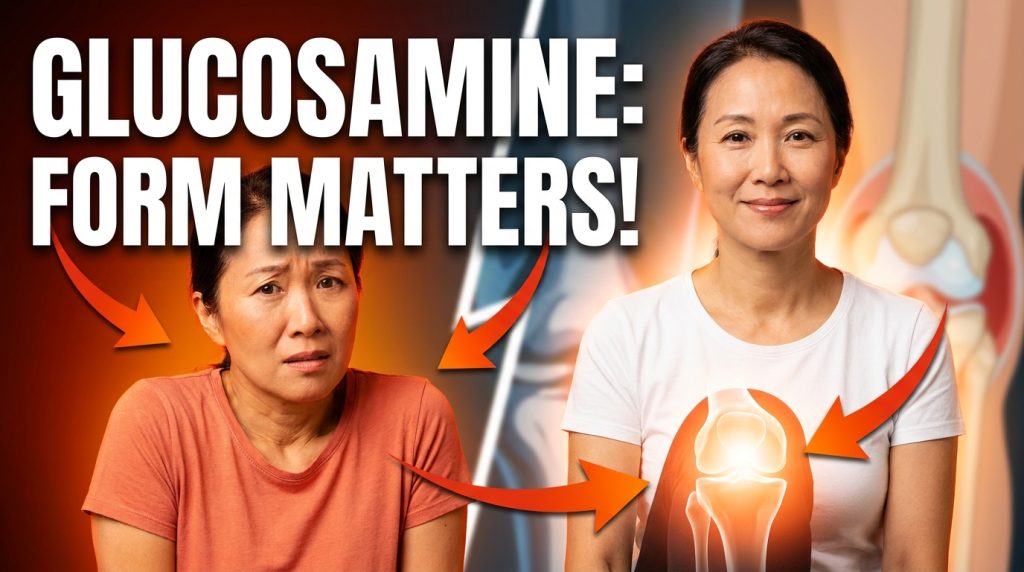
What glucosamine is (and why it’s marketed for cartilage)
Glucosamine is a compound involved in building glycosaminoglycans, which are part of cartilage structure. That connection is the reason it’s commonly marketed as “cartilage support” or “joint cushioning.”
But marketing language can accidentally give the impression that glucosamine “rebuilds cartilage” in a straightforward, guaranteed way. Real bodies are messier than that. Cartilage biology, joint inflammation, muscle strength, biomechanics, body weight, sleep, pain sensitivity, and activity levels all interact.
So while glucosamine has a *plausible* role in joint tissues, the more important question is: does taking it meaningfully change pain and function for real people?
Most people are really asking about osteoarthritis (OA), not “general wear-and-tear”
OA is often described as “wear-and-tear,” but that’s a bit oversimplified. OA involves:
- cartilage changes,
- bone changes,
- low-grade inflammation in the joint,
- and (very importantly) muscle weakness and altered movement patterns that increase joint stress.
That’s why people with OA often feel worse going downstairs, after long walks, or when standing up after sitting.
If your discomfort is coming from something else—like a ligament sprain, a meniscus tear, gout, or an inflammatory arthritis—glucosamine is much less likely to be useful (we’ll get into that in the next section).
Key takeaway upfront: mixed evidence, modest expectations, adjunct use
The most honest summary from major evidence reviews and guideline discussions is:
- Evidence is mixed. Some studies show small improvements in pain and function, others show little to no difference from placebo.
- Results can vary depending on product formulation, study quality, and what outcomes are measured.
- Several guidelines have recommended against routine use of glucosamine for OA because the benefits are uncertain compared with proven options (like exercise and weight management).
A reputable, pragmatic way to think about glucosamine is:
It may be worth a carefully chosen, time-limited trial for the right person—but it shouldn’t distract you from the strategies that reliably improve OA symptoms.
If you’re the kind of person who likes structure, this article will give you one: how to decide if you’re a good candidate, how to read labels, what dosages matter, and how to pair supplements with movement and flexibility work.
—
Knee/hip osteoarthritis vs other causes of joint pain: make sure you’re treating the right problem
Before you spend money (or hope) on any osteoarthritis supplements, it’s worth doing a quick reality check:
Common OA signs (pain with activity, stiffness, reduced function) vs red flags
Typical OA patterns often include:
- pain that worsens with activity and improves with rest,
- stiffness after sitting (often easing within 30 minutes),
- discomfort with stairs, squats, kneeling, or long walks,
- reduced range of motion over time,
- “creaky” sensations (crepitus) that may or may not hurt.
Now the important part: red flags suggest you need medical assessment rather than self-experimenting with supplements.
Seek medical care promptly if you have:
- significant swelling, warmth, redness, or severe tenderness,
- locking (joint gets stuck), giving way, or major instability,
- inability to bear weight after an injury,
- fever, feeling unwell, or new unexplained fatigue,
- unexplained weight loss,
- sudden severe pain in a joint (especially if you suspect gout).
In Singapore, that may mean starting with your GP, then being referred to an orthopaedic specialist or physiotherapist depending on the pattern.
Conditions glucosamine is unlikely to help (acute injury, inflammatory arthritis, gout)
Glucosamine is mainly studied in OA. It’s not a primary treatment for:
- acute sports injuries (sprains, strains, meniscus tears),
- inflammatory arthritis (like rheumatoid arthritis),
- gout (urate crystal flare-ups),
- infections,
- nerve-related pain that refers to the knee/hip from the back.
If your pain is “sharp and new,” started after trauma, or comes with prominent swelling and heat, don’t try to “supplement your way through it.”
When to see a GP/orthopaedic/physio in Singapore
Even if you suspect OA, it’s worth getting a proper evaluation if:
- symptoms last more than a few weeks and affect your walking,
- you’re avoiding movement because of fear of pain,
- you’ve reduced your activity and you’re getting weaker (this is common and very fixable),
- you want a structured strengthening plan that fits your lifestyle (and your knees).
A physiotherapist can be especially helpful for OA because many symptoms improve when you restore:
- quadriceps strength (front thigh),
- glute strength (hips),
- calf/ankle control,
- and a walking or cycling routine that doesn’t trigger constant flares.
Safety checklist (Singapore context): who needs to check with a clinician first
Glucosamine is generally considered relatively safe for many adults, but “generally safe” isn’t the same as “safe for everyone.”
Be extra cautious and talk to a clinician first if you:
- take warfarin or other anticoagulants/antiplatelets (there have been concerns about bleeding risk and INR changes reported in some contexts),
- have diabetes or are closely monitoring blood glucose,
- have a shellfish allergy (many glucosamine products are shellfish-derived; some are not—labels matter),
- are pregnant or breastfeeding (limited safety data),
- have a history of allergic reactions to supplements.
Also: supplements should never replace assessment if your pain is persistent, worsening, or function-limiting.
—
What to expect from glucosamine (and how to choose a product without getting lost in labels)
Let’s talk about the most practical part: how to pick a glucosamine supplement and what “realistic expectations” look like in day-to-day life.
Why the evidence feels so mixed (and why consumers get conflicting advice)
When big evidence reviews look at glucosamine, a recurring theme shows up: results differ based on product type and study quality.
- Some reviews have found modest improvements in symptoms in certain trials, but higher-quality trials often show smaller or no effects.
- Different studies use different formulations (not all glucosamine is the same), different doses, different durations, and different outcome measures.
If you’ve ever wondered why one person says “it saved my knees” while another says “did nothing,” part of that is individual variability, and part is that the research itself isn’t giving a single, neat answer.
Major clinical guidelines have also tended to prioritise interventions with more consistent benefits—especially exercise and weight management—and some guidelines recommend against glucosamine for routine OA management due to uncertain efficacy.
Glucosamine sulfate vs glucosamine hydrochloride (HCl): what labels mean
On labels, you’ll usually see one of these:
- Glucosamine sulfate
- Glucosamine hydrochloride (HCl)
They’re both forms of glucosamine, but they’re not identical. Research and guideline discussions sometimes point out that outcomes can vary by formulation and brand quality. The takeaway isn’t “one is always superior,” but rather:
Pick one clearly labelled form from a reputable manufacturer and use a consistent daily dose for a timeboxed period.
For example, Nano Singapore’s Glucosamine Extreme lists glucosamine HCl as its main active ingredient and also includes vitamin D3 (which is more of a bone-and-muscle support angle than a direct OA pain treatment). The practical value here is label clarity: you can see the form used and the stated amount.
If you prefer browsing within a broader joint-support range (for example, to compare glucosamine-only versus blends), Nano Singapore also groups products under its Joints, Bones & Muscles collection.
Combination products (with chondroitin/MSM): what evidence can and can’t tell you
Many “joint formulas” combine glucosamine with ingredients such as:
- chondroitin
- MSM (methylsulfonylmethane)
- botanicals like turmeric/curcumin or boswellia
Combination products can be convenient, but they introduce a common issue: you can’t tell which ingredient is doing what, and sometimes the individual doses are too small to match what’s been studied.
If you’re trying to run a clean 8–12 week experiment, a simpler formula is often easier to evaluate. If you like the idea of a blend, make sure the label shows clear per-day amounts for each active ingredient (not just a “proprietary blend”).
Dose basics consumers commonly see (and how to take it)
A commonly used total daily amount in studies and retail products is often around 1,500 mg/day of glucosamine (though exact protocols vary). Some people take it as a single daily dose; others split it into two or three smaller doses if they find that gentler on the stomach.
A few practical label-reading tips:
- Check whether the listed amount is per capsule or per serving (which may be 2–3 capsules).
- Look for the daily total you’ll actually get if you follow directions.
- Watch out for multi-ingredient blends where glucosamine is present but the effective daily amount is unclear.
Quality and trust: reputable brands, clear ingredient listing, third-party testing where available
Supplement quality isn’t just about the front label. If you want to be a smart shopper in Singapore, here’s what I’d look for:
- Clear active form (sulfate vs HCl) and a stated amount.
- Batch/expiry information and complete ingredient list (including capsule material).
- Manufacturer quality signals (e.g., GMP manufacturing claims, third-party testing statements, transparent sourcing).
- Avoid megablends that hide everything behind “matrix” language.
And yes—many people prefer to buy supplements online because it’s convenient and you can compare labels side-by-side. Just make sure you’re buying from a reputable seller with transparent product pages and storage practices.
Quick comparison: options for joint discomfort support (and how to decide)
Most people don’t need *more* options—they need a clearer decision.
| Option | What it may help with | Best for | Notes / watch-outs |
|---|---|---|---|
| Glucosamine sulfate | Possible modest symptom relief in some knee OA studies | People who want a single-ingredient trial for suspected knee OA | Evidence is mixed; product quality matters; trial for ~8–12 weeks and stop if no benefit |
| Glucosamine HCl | Possible modest symptom relief; outcomes vary by study/product | People who prefer HCl formulations and want simple dosing | Some guidelines recommend against routine use due to uncertain efficacy; still often used as a timeboxed experiment |
| Combo joint formulas (e.g., glucosamine + chondroitin/MSM/botanicals) | Convenience; may cover multiple “joint comfort” angles | People who strongly prefer an all-in-one approach | Harder to evaluate what’s working; check that each active ingredient has a clear dose (avoid “proprietary blends”) |
| Exercise + strengthening + weight management | Consistent improvements in pain/function in OA | Almost everyone with knee/hip OA | Core first-line approach in many guidelines; supplements are optional add-ons, not replacements |
Use the table like a shortcut, not a verdict. If you’re dealing with classic knee/hip OA symptoms, exercise and strengthening belong in your plan regardless. Glucosamine—whether sulfate or HCl—fits best as an adjunct you trial thoughtfully, not a “forever purchase” you keep taking out of habit.
—
How to combine glucosamine with an ‘ActiveSG’ joint plan (if you choose to try it)
If you decide to try glucosamine, the best way to avoid disappointment is to treat it like a small personal study. Not intense. Just structured.
A practical timeline: think weeks to months, not days
Most people who report benefit aren’t talking about a “next-day” transformation. A realistic window is 8–12 weeks of consistent daily intake—alongside the behaviours that actually reduce joint stress.
If you’re hoping to feel something by Day 3, you’re setting yourself up to either:
- stop too early, or
- keep going for months without knowing whether it’s doing anything.
How to track changes (so you’re not guessing)
Pick one pain measure and two function measures. Keep it simple.
Here’s an easy set:
- Pain (0–10) for a specific task: *“pain going downstairs”* or *“pain after 20 minutes of walking.”*
- Sit-to-stand: how many good-quality stands from a chair in 30 seconds.
- Stairs test: time yourself going up/down one flight at a comfortable pace (use the same stairs).
- Optional: weekly step count or walking duration.
Write down your baseline at Week 0, then check in at Week 4 and Week 8.
When to stop (and why stopping is a smart move)
If there’s no meaningful improvement after ~8–12 weeks—no easier stairs, no longer walks, no drop in your “pain after activity” score—consider stopping.
This isn’t being negative. It’s being evidence-based and budget-conscious.
In Singapore, the opportunity cost is real: the money you spend repeatedly on a supplement that isn’t helping could go toward:
- a few physiotherapy sessions to learn a safe strengthening routine,
- supportive footwear,
- a gym or pool pass,
- or even just freeing up time to walk consistently.
If you improve: how long to continue and when to reassess
If you see a clear, consistent improvement (not just a “good week”), you can:
- continue for another period (e.g., 2–3 months),
- then reassess whether the benefit holds.
Some people choose to cycle supplements. Others continue longer-term. The key is not to let it become automatic—keep checking whether it’s still doing something noticeable.
The “supplements are not the main lever” reminder (because it’s easy to forget)
If you only take one idea from this whole article, make it this:
Your joints usually feel better when your muscles do more of the work.
For knee OA, that often means:
- quadriceps strength (helps with stairs and standing),
- glute strength (helps hip/knee alignment and walking efficiency),
- and consistent low-impact cardio to build capacity without constant flare-ups.
A very Singapore-friendly joint plan might look like:
- Brisk walking on flat routes (park connectors are perfect).
- Cycling (often knee-friendly because it’s low impact).
- Swimming or aqua walking (excellent during flare-ups).
- Strength work 2–3x/week:
– sit-to-stand practice,
– step-ups to a low step,
– hip hinges or supported deadlifts (light),
– side-lying leg raises or band walks.
If pain flares:
- reduce intensity, shorten duration, keep moving gently,
- and talk to your clinician about appropriate pain relief options (like topical NSAIDs for some people).
Activity modifications that protect movement and flexibility (without “babying” the joint)
People often swing between two extremes: pushing through pain or avoiding movement entirely.
A better middle path is pacing:
- Break longer walks into two shorter ones.
- Avoid deep knee bends on bad days; use partial squats or chair-assisted versions.
- Use handrails on stairs temporarily—this is not “weak,” it’s smart load management.
Footwear can also matter more than people think. If your shoes are worn down and unstable, your knees may pay the price. Insoles may help some individuals (especially with alignment issues), but they’re not a universal fix.
—
Conclusion
Glucosamine for joint health is one of those topics where the most helpful answer is also the least exciting: it depends—and even when it helps, the effect is usually modest.
If you have suspected knee or hip osteoarthritis and you want to try glucosamine, the most realistic approach is:
1) keep your foundation strong (strengthening, aerobic movement, weight management),
2) choose a clearly labelled product from a reputable brand, and
3) run a timeboxed 8–12 week trial with simple tracking.
And if you have red flags (swelling, locking, instability, fever, unexplained weight loss) or you’re in a higher-risk group (warfarin, diabetes monitoring, shellfish allergy, pregnancy/breastfeeding), make your clinician your first stop—not your supplement cart.
If you’d like to compare options and labels at your own pace, you can always buy supplements online.
Frequently Asked Questions
FAQ 1
Can I take glucosamine long-term?
Some people do, but it’s smarter to reassess periodically. If you can’t tell whether it’s helping anymore, that’s a good reason to pause and see if anything changes—especially if cost is adding up.
FAQ 2
Is glucosamine okay with kopi/tea, calcium, fish oil, or collagen?
Often yes for many adults, but “often” isn’t “always.” The bigger issue is medication interactions (especially warfarin) and whether combination products cause ingredient overlap. If you’re stacking multiple supplements, double-check labels to avoid unnecessary duplicates.
FAQ 3
What if my pain is in the hands, shoulders, or back?
Glucosamine research is strongest (though still mixed) for knee OA. For other joints, evidence is generally less clear. Hand pain may be OA, but it can also be tendon irritation or inflammatory arthritis—getting the right diagnosis matters a lot here.
FAQ 4
Should I take glucosamine “preventively” if I run or play badminton?
If you’re pain-free and functioning well, “prevention” is usually better served by strength training, good footwear, smart training load, and recovery. Supplements aren’t a substitute for those basics, and there’s no guarantee a supplement prevents OA.
FAQ 5
What should I tell my GP or physiotherapist before starting?
Share: where the pain is, what triggers it, any swelling/locking/giving way, your current meds (especially blood thinners), allergies (shellfish), and your goals (stairs, walking tolerance, returning to sport). If you plan to trial glucosamine, tell them what product and dose you’re considering so they can advise safely.
References
- `https://www.nccih.nih.gov/health/glucosamine-and-chondroitin-for-osteoarthritis-what-you-need-to-know`
- `https://www.cochrane.org/evidence/CD002946_glucosamine-osteoarthritis`
- `https://pmc.ncbi.nlm.nih.gov/articles/PMC10518852/`
- `https://rheumatology.org/press-releases/american-college-of-rheumatology-arthritis-foundation-release-updated-treatment-guideline-for-osteoarthritis`
- `https://www.nejm.org/doi/full/10.1056/NEJMoa052771`
Disclaimer
All the content on this blog, including medical opinion and any other health-related information, is solely to provide information only. Any information/statements on this blog are not intended to diagnose, treat, cure or prevent any disease, and should NOT be a substitute for health and medical advice that can be provided by your own physician/medical doctor.
We at Nano Singapore Shop encourage you to consult a doctor before making any health or diet changes, especially any changes related to a specific diagnosis or condition.
