


Omega‑3 for Kids and Adults Who Dislike Capsules: Are Gummy Supplements Enough?
Tags: Wellness, Family Health, Child Nutrition, Brain Health, Supplements
Omega‑3 gummies can be a practical option for kids and adults who hate capsules—but only if the product delivers a meaningful amount of EPA + DHA.
This guide explains the real omega 3 gummies benefits, how to read labels fast, and when to choose other formats instead.
If you can’t swallow fish oil capsules (or your child refuses them), it’s easy to assume gummies are automatically “weaker.”
In practice, the “best” omega‑3 is often the one you’ll actually take—but only if it contains enough of the omega‑3s that matter most in research:
EPA (eicosapentaenoic acid) and DHA (docosahexaenoic acid)
(NIH ODS;
NCCIH).
Many products marketed around omega 3 gummies benefits spotlight “fish oil (mg)” on the front label,
while the evidence base generally focuses on EPA + DHA (mg) in the Supplement Facts panel.
Gummies can absolutely help with supplement adherence—especially for kids and capsule‑averse adults—but label literacy and dose practicality
are where most people get stuck.

We’ll also show how to evaluate a real gummy product page (as an example)—such as
Omega‑3 Fish Oil Gummies – 60ct—by focusing on
EPA + DHA per serving, added sugars, and whether the daily routine is realistic.
Example only: this is not a medical endorsement, and you should compare multiple products.
Omega‑3 Basics: What You’re Actually Trying to Get (EPA + DHA vs ALA)
“Omega‑3” refers to a family of fatty acids—and the forms are not interchangeable. The most common types you’ll see are:
- EPA (eicosapentaenoic acid) – commonly found in fatty fish and marine oils
- DHA (docosahexaenoic acid) – commonly found in fatty fish and marine oils; a major structural fat in the brain and retina
- ALA (alpha‑linolenic acid) – found in flax, chia, walnuts, and some plant oils
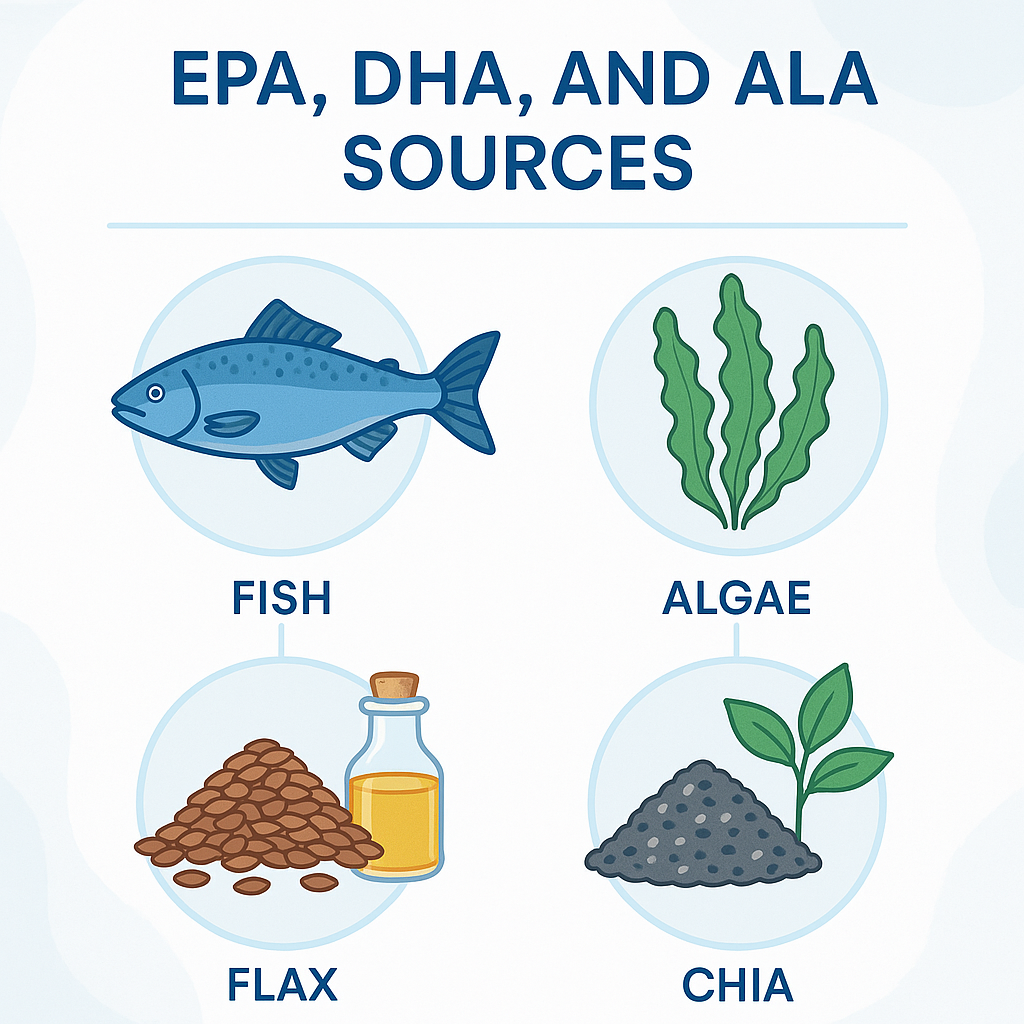
Omega‑3 is a family—EPA and DHA are the most evidence‑linked supplement forms
Most clinical research on omega‑3 supplements focuses on the long‑chain omega‑3s EPA and DHA, not ALA
(NIH ODS;
NCCIH).
That’s why the most meaningful “dose” for omega 3 gummies benefits is usually EPA + DHA (mg) per day.
For parents researching EPA DHA for kids, DHA is often highlighted because it is a structural component of the brain and retina.
A pediatric review describes DHA as fundamental in children’s growth and development, particularly for the central nervous system and retina
(Valenzuela 2017).
Why ALA (flax/chia) doesn’t reliably replace EPA/DHA
ALA is a healthy fat and ALA‑rich foods can be part of a balanced diet. However, ALA must be converted into EPA and DHA—and that conversion is limited and variable
(NIH ODS). Practically, relying on ALA alone may not raise EPA/DHA levels as efficiently as consuming EPA/DHA directly.
If your household avoids fish, this is where fish oil alternatives such as algal oil (a vegetarian source of DHA, and sometimes EPA)
become especially relevant (NCCIH).
Omega 3 Gummies Benefits: What They Can (and Can’t) Do Compared With Capsules
Do gummies “work”? They can—if the gummy provides enough EPA + DHA and you take it consistently.
Many of the real‑world omega 3 gummies benefits come from improving routine consistency for people who avoid softgels.
Main advantage: better supplement adherence
Taste and texture can make or break a daily habit. Gummies often improve supplement adherence because they’re easier to take than capsules—
especially for children and adults with strong gag reflexes.
Main limitation: dose practicality (EPA + DHA per serving)
Omega‑3 oils are bulky ingredients, and gummies have formulation limits. As a result, many gummies provide less EPA + DHA per serving than typical softgels.
If you try to “make up the difference” by taking many gummies, you may run into issues with sugar, cost per day, and exceeding label directions.
Bottom line
- Capsules/softgels: typically more EPA + DHA per unit (dose‑dense), often more cost‑efficient per mg.
- Gummies: often easier to take consistently, but you must confirm EPA + DHA and keep servings realistic.
How to Read an Omega‑3 Gummy Label (The 60‑Second Checklist)
If you want reliable omega 3 gummies benefits, label‑reading is non‑negotiable—especially with gummies.
Use this checklist online or in‑store.
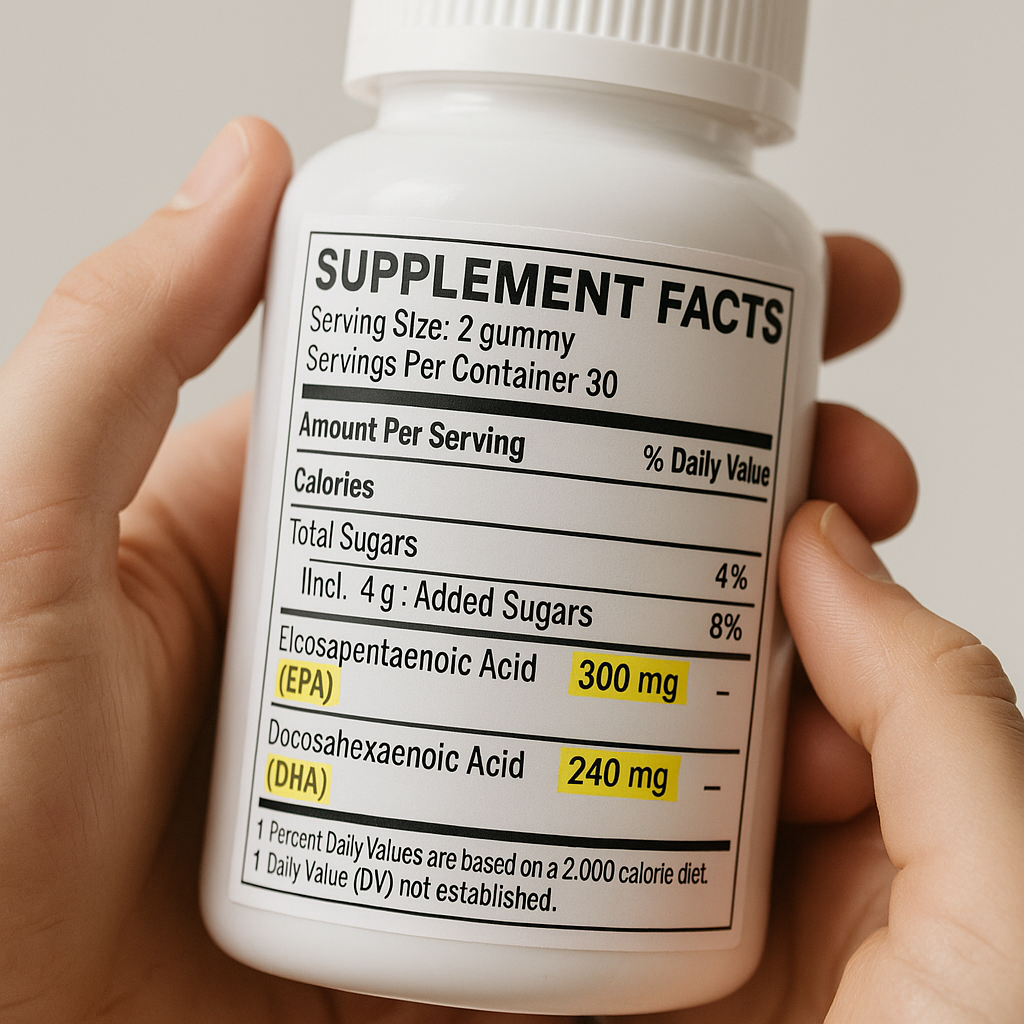
1) Find EPA (mg) and DHA (mg), then add them
The most meaningful number is usually total EPA + DHA per daily serving, not “fish oil mg.”
A front label can list a large fish‑oil number even when EPA + DHA are modest.
2) Confirm serving size (e.g., 2 gummies) and servings per bottle
Serving size changes everything: your daily EPA + DHA, sugar intake, and cost per day.
For families using gummies for EPA DHA for kids, serving size also determines whether the routine is realistic on school mornings.
3) Check added sugars and calories (especially for kids)
A small amount of added sugar may fit many families. The concern is when you need multiple servings daily to reach your target—sugar and dental exposure can add up.
4) Look for quality and freshness clues
- Clear expiration date and storage instructions
- Transparent labeling and reputable manufacturing/sourcing where possible
- Stop using the product if it smells strongly rancid (paint‑like) or tastes “off”
5) Screen for fit (allergens, dietary preferences, special ingredients)
- Fish allergy: fish‑oil gummies may not be appropriate; consider fish oil alternatives like algal oil (NCCIH).
- Vegetarian/vegan: consider algal oil as a source of DHA (and sometimes EPA).
- Cod liver oil caution: some omega‑3 products contain vitamins A and D, which can be harmful in excess (NCCIH).
Want a practical example? Use the checklist above on
Omega‑3 Fish Oil Gummies – 60ct
and confirm the EPA, DHA, serving size, and sugars align with your household needs.
Quick comparison: Gummies vs capsules vs liquid vs algal oil
| Format | Pros | Cons | Best for |
|---|---|---|---|
| Gummies | Easy routine; kid‑friendly; often improves supplement adherence | Often lower EPA + DHA per piece; may contain added sugar | Kids and adults who dislike capsules |
| Softgels/capsules | Higher dose density; often cost‑effective per mg EPA + DHA | Hard for capsule‑averse users; can cause “fish burps” in some | Adults who can swallow pills; higher EPA + DHA targets |
| Liquid fish oil | Flexible dosing; can be high EPA + DHA | Taste/aftertaste; storage needs; measuring consistency | Families who want adjustable omega 3 dosage |
| Algal oil (capsule/liquid/gummy) | Vegetarian/vegan option; useful fish oil alternative | May be pricier; not all products include EPA—check the label | Fish‑averse, vegetarian, or allergy‑concerned families |
Omega 3 Dosage: What’s “Enough” for Kids vs Adults?
People searching for omega 3 dosage often want one perfect number.
A more useful approach is a framework: “enough” depends on your baseline seafood intake, your goal, and what you can take consistently.
This article provides general education, not individualized medical advice. If you’re considering higher‑dose supplementation (especially for a child),
consult a qualified clinician.
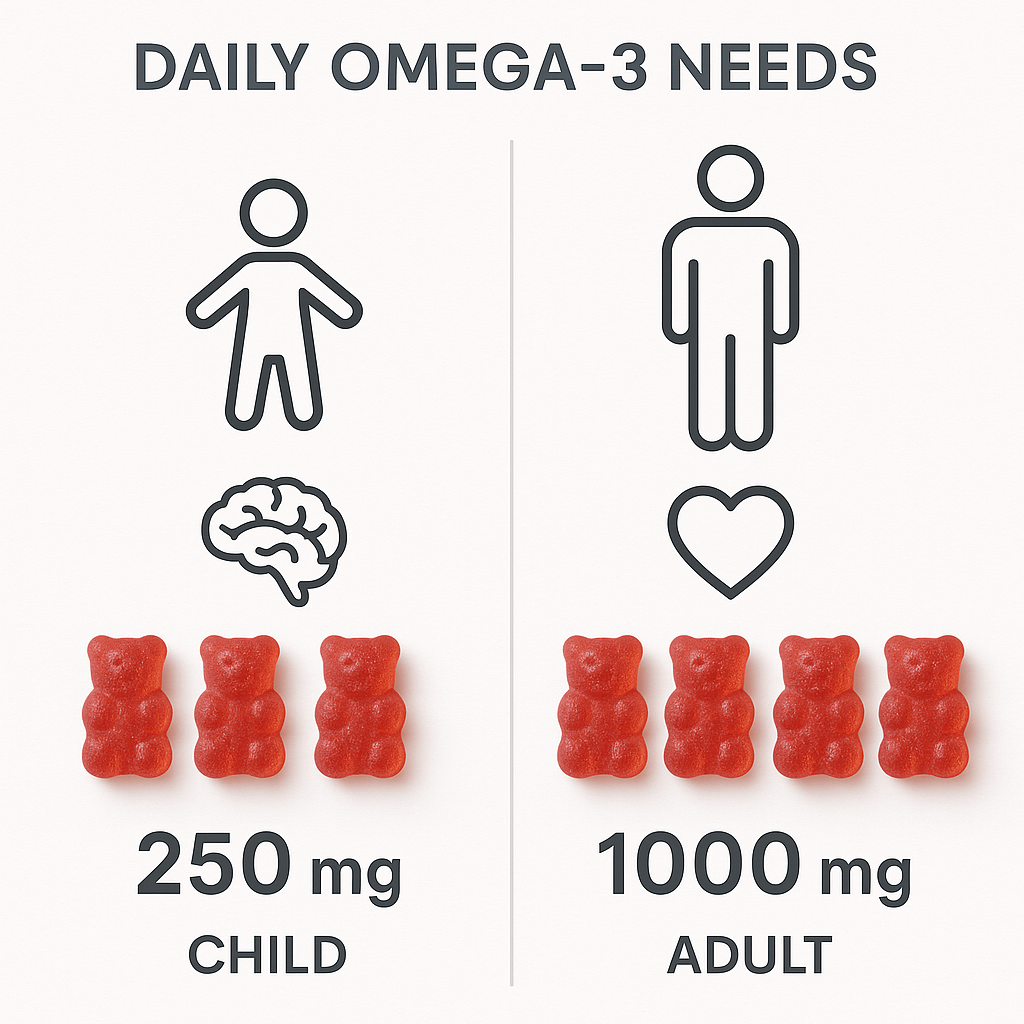
Start with your goal: “diet gap coverage” vs targeted outcomes
Many families simply want to cover a dietary gap because they rarely eat seafood.
NCCIH notes that evidence for benefits from eating seafood can be stronger than evidence for supplements for some outcomes,
likely because seafood contributes additional nutrients and reflects broader dietary patterns (NCCIH).
Supplements can still be useful when seafood intake is low or preferences make “food first” unrealistic.
Kids: DHA is important, but expectations should stay realistic
For EPA DHA for kids, DHA receives special attention as a structural component of brain and eye tissue.
However, research in children shows mixed results across outcomes and populations; effects may depend on baseline status, age, overall diet, and study design.
It’s best to frame omega‑3 as one supportive input alongside sleep, regular meals, movement, and overall nutrition.
Adults: evidence suggests modest effects in some cardiovascular outcomes
NCCIH summarizes systematic reviews and meta‑analyses suggesting that increased EPA/DHA intake may modestly reduce risk of some coronary outcomes in certain analyses.
Omega‑3 supplements are not a substitute for medical care, prescribed medications, blood pressure control, exercise, or dietary improvements.
A practical “label math” habit
EPA DHA for Kids: When Gummies Make Sense (and When They Don’t)
Parents usually consider gummies for one simple reason: their child won’t take capsules.
That’s not a minor detail—it’s often the deciding factor for supplement adherence.
When chosen carefully, gummies can be a low‑conflict way to support EPA + DHA intake.
Best‑fit scenarios
- Capsule refusal: gagging, fear, or inability to swallow pills
- Routine‑friendly timing: gummies fit naturally after breakfast (not all day long)
- Low seafood intake: fish is rarely eaten and “food first” isn’t realistic right now
- Consistency matters most: you’re prioritizing a sustainable daily habit
When gummies may not be the best tool
- Higher EPA + DHA needs: if a clinician recommends a higher intake and gummies would require too many pieces, switch formats.
- Sugar/dental concerns: repeated daily gummies can increase sugar exposure; consider lower‑sugar products or non‑gummy options.
- Age/choking risk: gummies may be a choking hazard depending on age and chewing ability—follow label age guidance and supervise.
- Fish allergy: consider fish oil alternatives such as algal oil (NCCIH).
Parent tips to support supplement adherence (without battles)
- Anchor to a cue: “after breakfast” or “after brushing teeth.”
- Use short‑term habit support: a 2–4 week sticker chart, then taper.
- Store safely: gummies look like candy—keep them out of reach to prevent accidental overuse.
- Avoid grazing: one scheduled dose reduces tooth exposure versus multiple mini‑doses.
Brain Health Nutrients: Omega‑3s Work Best in a Bigger Picture
Omega‑3s matter—but they rarely operate in isolation. For the most realistic view of omega 3 gummies benefits,
place omega‑3 intake within overall diet quality, sleep, and lifestyle.
Food‑first context (when possible)
NCCIH notes that evidence for benefits from eating seafood can be stronger than evidence for supplements in some cases (NCCIH).
If your household can manage even occasional seafood meals, that can be a strong baseline—supplements can then fill gaps.
Other nutrients that often matter for learning and day‑to‑day function
- Choline (eggs, meats, legumes)
- Iodine (iodized salt; seafood; dairy where appropriate)
- Iron (meat, legumes, fortified foods; testing/supplementing should be clinician‑guided if concerned)
- Zinc (meat, dairy, legumes, nuts/seeds)
- Vitamin B12 (animal foods; supplementation may be needed for strict vegetarian diets)
- Vitamin D (varies widely; discuss testing/supplementation with a clinician if needed)
- Protein and overall energy intake (often overlooked for selective eaters)
If you’re exploring omega‑3s for focus, mood, or learning, consider gummies as one supportive tool—not a standalone fix.
Sleep consistency, movement, and balanced meals can be powerful “non‑supplement supports” that affect how kids and adults feel day to day.
Fish Oil Alternatives (Vegetarian, Fish‑Averse, or Allergy‑Concerned Households)
Not everyone wants fish oil—and some people can’t have it. The key is choosing alternatives that still provide EPA and/or DHA (not only ALA).
Algal oil: a direct source of DHA (sometimes EPA)
Algal oil (from marine algae) is one of the most practical fish oil alternatives because it can provide DHA
(and sometimes EPA) without fish. NCCIH notes algal oil as an omega‑3 source for people who avoid seafood.
Always check the label for the exact EPA and DHA amounts.
ALA foods (flax/chia/walnuts): nutritious, but not equivalent to EPA/DHA
ALA‑rich foods can support overall diet quality, but conversion to EPA/DHA is limited and variable (NIH ODS).
If your goal is specifically to increase EPA + DHA intake, consider algal oil or other direct sources.
Other capsule‑free formats (beyond gummies)
- Flavored liquids/emulsions: flexible dosing and often easier to scale
- Mini‑softgels: smaller size may work for some capsule‑averse adults
- Fortified foods: check labels for actual EPA/DHA (not only ALA)
Safety, Side Effects, and Quality: What Families Should Watch For
Omega‑3 supplements are widely used, but safety depends on dose, product type, and individual context.
Gummies have a few unique considerations.
Sugar, teeth, and taking more than directed
- Use gummies only as directed on the label.
- Take them at one consistent time (avoid all‑day nibbling).
- Keep toothbrushing consistent—especially at night.
- Store out of children’s reach to prevent accidental overconsumption.
Fish allergy and ingredient sensitivities
Fish‑oil gummies may not be suitable for people with fish allergy. Consider fish oil alternatives such as algal oil (NCCIH).
Also check gelatin source, flavorings, and other ingredients relevant to your household.
Oxidation/rancidity and storage
Omega‑3 oils can oxidize over time. Protect product quality by checking expiration dates, buying from reputable sellers,
storing as directed (heat/humidity matter), and discontinuing use if the product smells or tastes rancid.
Medication interactions and bleeding risk
If you take anticoagulant/antiplatelet medicines, have a bleeding disorder, or are planning surgery, consult a clinician before higher‑dose omega‑3 use.
This becomes especially relevant if someone tries to “scale up” gummies by taking multiple servings per day.
If you need higher EPA + DHA, switching formats is often more practical than increasing gummy count.
Cod liver oil caution (vitamins A and D)
Some omega‑3 products are liver‑derived and may contain vitamins A and D, which can be harmful in excess (NCCIH).
If your family also uses a multivitamin, factor total vitamin A and D intake into your plan.
Choosing the Right Omega‑3 Gummy: A Buyer’s Checklist
Shopping is easier when you score products on what drives outcomes: EPA + DHA delivery, sugar tradeoffs, and long‑term supplement adherence.
Use this framework to compare options and decide whether gummies can realistically deliver the omega 3 gummies benefits you’re aiming for.
5 must‑haves
- EPA (mg) and DHA (mg) clearly listed (not only “fish oil”)
- Realistic serving size for your routine and goals
- Acceptable added sugars for your household
- Palatable taste/texture to support daily consistency
- Quality signals (expiry date, storage guidance, transparent labeling)
Nice‑to‑haves
- Third‑party testing or quality certifications (when available)
- Clear allergen disclosure and gelatin source
- Multiple flavor options (often helpful for kids)
Example product page (Singapore shoppers)
If you want a capsule‑free option, you can review
Omega‑3 Fish Oil Gummies – 60ct
and apply the checklist above.
Focus on whether the EPA + DHA per serving and the sugar per serving fit your household’s goals.
FAQ: Omega‑3 Gummies for Kids & Adults
1) Are omega‑3 gummies enough, or are capsules better?
Gummies can be enough if they provide a meaningful amount of EPA + DHA and you take them consistently.
Capsules are often more dose‑dense, which can make higher EPA + DHA targets easier.
In real life, consistency matters: a gummy taken daily can outperform a capsule you avoid.
2) What should I look for on the label to get real omega 3 gummies benefits?
In the Supplement Facts panel, find EPA (mg) and DHA (mg), then add them for total EPA + DHA per daily serving.
Don’t rely on “fish oil (mg)” alone. Then check serving size, added sugars, and whether the routine is realistic.
3) How many omega‑3 gummies should kids take per day?
Follow the product’s age directions and serving size. Then calculate total EPA + DHA delivered per day:
(EPA + DHA) × servings.
Because children’s needs vary by age, diet, and health status, talk with a pediatric clinician if your child has medical conditions,
takes medications, has allergy concerns, or if you’re considering higher intakes.
4) Do omega‑3 gummies help with focus or ADHD in kids?
Research in children is mixed, and any effects reported are typically modest and variable across studies.
Omega‑3s are not a substitute for evaluation or evidence‑based care.
If you’re trying gummies for focus, treat them as one supportive tool within a broader foundation (sleep, routines, balanced nutrition).
5) What are the best fish oil alternatives if my family doesn’t eat fish?
Algal oil is one of the most practical fish oil alternatives because it provides DHA (and sometimes EPA) without fish (NCCIH).
ALA foods (flax/chia/walnuts) are healthy but convert to EPA/DHA inefficiently (NIH ODS), so they may not fully replace marine omega‑3s for EPA/DHA goals.
6) Do omega‑3 gummies cause fish burps or stomach upset?
It varies by person and product. Taking omega‑3 with food can help. Freshness matters—oxidized oils can taste worse.
If symptoms persist, consider switching brands or trying algal oil.
7) Are omega‑3 gummies safe every day? What about sugar and teeth?
Many people use omega‑3 supplements daily. With gummies, the main issues are added sugars, dental exposure, and taking more than directed.
Use as labeled, store safely, and avoid grazing throughout the day. If you need a higher EPA + DHA intake than gummies can realistically provide,
switching formats is often a better strategy.
Conclusion: Are Omega‑3 Gummies “Enough”?
Omega‑3 gummies can be “enough” when they deliver a meaningful amount of EPA + DHA, fit your routine, and keep added sugars reasonable.
Capsules often make higher EPA + DHA targets easier—but supplement adherence matters more than a perfect product you won’t take.
For families researching EPA DHA for kids, DHA plays an important structural role in brain and eye development
(Valenzuela 2017).
Keep expectations realistic and place omega‑3 within a bigger foundation of overall nutrition, sleep, and routines.
For adults, NCCIH summarizes evidence suggesting modest cardiovascular effects in some outcomes, while seafood‑forward dietary patterns remain a strong baseline when feasible.
Call to action: If you want help comparing options, share 1–3 supplement labels you’re considering (a photo or screenshot is fine).
We can calculate total EPA + DHA per day, flag sugar tradeoffs, and suggest the most practical capsule‑free path—gummies, liquids, mini‑softgels, or algal oil.
