





Key Takeaways
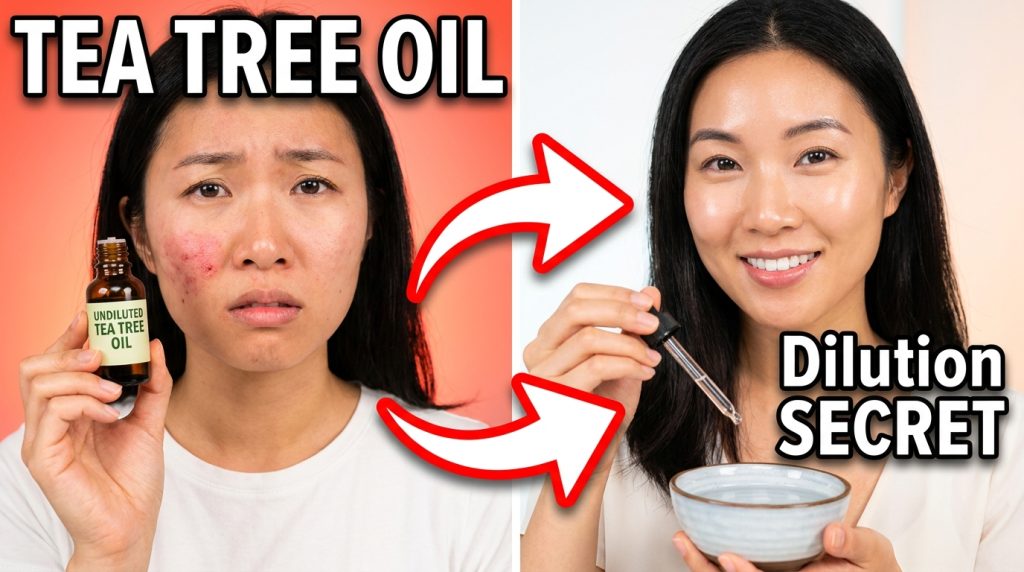
- Tea tree oil is *not* a “dab it on neat and hope for the best” ingredient—undiluted use is a common trigger for irritation and allergic contact dermatitis, especially on sensitive or broken skin.
- If you’re going to use tea tree oil as a leave-on (face or body), start low (often around 0.5–1%), avoid sweaty/occluded zones, and patch test for 48 hours because reactions can be delayed.
- Old, poorly stored tea tree oil is more likely to cause problems—heat, light, and oxygen speed up oxidation, which can increase sensitising compounds.
Introduction
If you’ve ever come home from a hot, sticky day in Singapore, peeled off your mask, and noticed a fresh bump (or a whole constellation of them) along your cheeks and jaw… you’re not alone. In that “I need this gone by tomorrow” moment, tea tree oil is one of the first things people reach for—because it’s natural, it smells medicinal, and someone online swore it “shrunk a pimple overnight.”
Here’s the thing: tea tree oil *can* be useful for certain skin concerns, but it’s also one of those ingredients that can backfire spectacularly when it’s used the wrong way. Undiluted application, mixing it into random products, using it under sweaty occlusion (hello, mask + humidity), or applying it to already-angry skin can tip you straight into redness, peeling, or a rash that’s far more dramatic than the original problem.
This guide walks you through how to use tea tree oil safely on skin—with practical dilution tips, patch testing steps, and the common mistakes I see again and again (plus what to do instead).
Quick answer: Can you put tea tree oil directly on skin?
Most of the time: no, you shouldn’t apply tea tree oil “neat” (undiluted) directly onto skin, especially on the face.
Tea tree oil (melaleuca oil) is an essential oil—meaning it’s a concentrated mix of volatile plant compounds. That concentration is exactly why people like it, but it’s also why it can sting, irritate, or trigger contact dermatitis in some users. Reactions aren’t rare enough to dismiss, and they’re more likely when you use higher concentrations or apply it repeatedly.
Why “neat” (undiluted) tea tree oil is a common cause of irritation and rash
Two broad categories of “my skin hated that” reactions matter here:
- Irritant contact dermatitis: your skin barrier gets overwhelmed or damaged (burning, redness, dryness, peeling).
- Allergic contact dermatitis: your immune system decides tea tree oil (or one of its oxidation by-products) is an allergen (itching, rash, swelling, sometimes blistering). Tea tree oil is a known cause of allergic contact dermatitis, and risk is influenced by concentration and oxidation (more on that later).
Because Singapore’s climate often means more sweat + more friction + more occlusion (masks, helmets, workout gear), irritation risk can climb even if you’re using an amount that *seems* small.
A good mental model is: tea tree oil isn’t a gentle moisturiser. Treat it like an “active.”
Who should skip tea tree oil entirely (or ask a pharmacist/GP first)
You don’t need to be fearful—just strategic. Consider avoiding tea tree oil (or only using it with professional guidance) if:
- You have eczema / atopic dermatitis or very reactive skin. A compromised barrier is more vulnerable to irritants and allergens.
- You’re currently flaring (oozing, cracked, raw, or inflamed skin).
- You’ve had previous allergic reactions to essential oils, fragrances, or botanicals.
- You’re using prescription acne treatments (topical retinoids, antibiotics) or strong over-the-counter actives (benzoyl peroxide, acids) and you’re not sure how to combine them safely.
- You’re considering use on young children—especially toddlers. Essential oils are not “harmless because natural,” and accidental exposure/ingestion risks matter.
If you’re unsure, a community pharmacist in Singapore can be surprisingly helpful—especially if you show them *exactly* what product you’re using and where you want to apply it.
Safety first: the top risks with tea tree oil on skin
Tea tree oil’s biggest problem isn’t that it “doesn’t work.” It’s that people often use it at the exact time their skin is least able to tolerate it—when it’s sweaty, inflamed, over-exfoliated, or already sensitised.
Let’s make the risks concrete so you know what you’re trying to prevent.
Irritant contact dermatitis vs allergic contact dermatitis (why the difference matters)
Irritant contact dermatitis is more “dose and context” dependent:
- Higher concentration
- More frequent use
- More friction/occlusion
- More compromised barrier
…all increase the odds.
Allergic contact dermatitis can be trickier:
- You might tolerate tea tree oil for a while, then suddenly react.
- Even low concentrations can trigger a reaction once you’re sensitised.
- The solution is *not* to “push through.” It’s to stop exposure and avoid that trigger.
In real life, the symptoms can overlap. But if you see swelling, hives, blistering, or a spreading rash, treat that as a red flag—not “purging.”
Delayed reactions: why symptoms can appear 24–48+ hours later
One reason tea tree oil catches people off guard is timing. Contact dermatitis reactions may not show up immediately. It’s common for allergic reactions to develop after a delay—often 24–48 hours (or more) after exposure.
That’s why a quick “it didn’t sting” test isn’t enough. You want an actual patch test with enough observation time.
Oxidation problem: old/poorly stored tea tree oil is more sensitising
Tea tree oil changes as it sits around—especially once opened. Exposure to air (oxygen), heat, and light can lead to oxidation and formation of compounds that are more likely to sensitise skin. In a warm, humid climate, that storage piece matters even more than people think.
Practical takeaway: if your bottle is ancient, has been stored in the car, or smells “off” (sharper, more resin-like, less fresh), don’t try to “use it up.” Your face isn’t the place for that experiment.
How to use tea tree oil safely in Singapore: dilution + patch testing
If you want the “how-to” in one line: dilute, patch test, then use sparingly—especially on the face.
And yes, dilution can feel intimidating because people start talking in percentages. But once you see the logic, it’s genuinely manageable.
Before we get specific: if you prefer a ready-to-use product with clear labeling, look for formulations that state the tea tree oil percentage. If you’re starting with a pure essential oil like Nano Singapore’s 100% Pure Australia Tea Tree Oil – 50ml, just remember: “100% pure” also means “100% concentrated,” so you’re responsible for the final concentration on your skin.
Choose the right base: carrier oils vs creams/gels (and what to avoid in humid weather)
Carrier oils (like jojoba, squalane, grapeseed) are traditional bases for diluting essential oils. They’re simple and don’t usually sting.
But in Singapore’s humidity, some people find heavy oils feel:
- too occlusive under masks,
- more likely to trap sweat,
- a bit uncomfortable in acne-prone zones.
If that’s you, you have options:
- Use a lightweight carrier (squalane is a common choice).
- Use tea tree oil only as a spot treatment (small area, not full face).
- Consider a wash-off approach (short contact time), rather than leaving it on all day.
- Or choose a formulated gel/cream designed for acne-prone skin, ideally with a stated %.
Also: avoid mixing tea tree oil into random acids/retinoids “to boost results.” That’s a fast track to irritation.
Practical dilution ranges for leave-on skin (face vs body) and why starting low matters
There isn’t one “perfect” dilution that fits everyone, but a cautious starting approach looks like this:
- Face (leave-on): start around 0.5% (especially if you’re acne-prone or sensitive), then only increase if your skin clearly tolerates it.
- Body (leave-on): often 1% is a reasonable start; some people tolerate 2% on thicker skin (like back/shoulders), but higher isn’t automatically better.
- High-sweat or friction zones (mask line, helmet strap area, groin folds, under bra band): treat these as *high risk for irritation*. Lower concentration, less frequent use, and often better to avoid leave-on essential oils entirely.
A key idea for skin irritation prevention: frequency matters as much as concentration. A “safe-ish” dilution used five nights in a row on a stressed barrier can still cause problems.
Simple mixing math: drops-to-mL examples + how to label your mix
Drop size varies by bottle and viscosity, but a common estimate is:
- 20 drops ≈ 1 mL of essential oil
Using that, here’s a practical cheat sheet for 10 mL of carrier/base:
- 0.5% ≈ 0.05 mL ≈ ~1 drop in 10 mL
- 1% ≈ 0.1 mL ≈ ~2 drops in 10 mL
- 2% ≈ 0.2 mL ≈ ~4 drops in 10 mL
If you’re mixing a tiny amount (say, 5 mL), just halve the drops.
Label your mix (seriously). Write:
- “Tea tree oil X%”
- the carrier used
- the date mixed
It sounds extra—until you find an unlabelled bottle later and realise you’ve created a mystery concentration.
Spot use vs full-area application: when each is appropriate
If you’re using tea tree oil for acne/blemishes, spot-only is usually the better starting point—especially for “maskne” clusters where friction is already inflaming the area.
- Spot use: apply a tiny amount of *diluted* mix to the blemish, not the whole cheek.
- Full-area use: consider only if you’ve patch tested, you’re using a low concentration, and your skin isn’t reacting to other actives.
Storage in Singapore: heat/light, tight caps, and when to discard
A few storage rules that genuinely reduce risk:
- Keep the cap tightly closed (oxygen exposure matters).
- Store away from sunlight and heat (not on a windowsill, not in a hot car).
- Avoid storing in a steamy bathroom if possible.
- Respect expiry dates. If scent changes noticeably, consider discarding.
Quick comparison: your main “routes” for using tea tree oil
Different approaches suit different skin types and tolerances. Here’s a quick way to compare options before you commit.
| Option | Typical tea tree oil strength | Best for | Notes / common pitfalls |
|---|---|---|---|
| Undiluted (“neat”) tea tree oil dabbed on skin | 100% | Generally not recommended for routine facial use | Higher irritation/allergy risk; especially risky on broken skin, under masks/helmets, or when combined with acids/retinoids |
| DIY diluted leave-on (oil or cream base) | ~0.5–2% | Spot treatment; body breakouts; cautious facial use | Start low; label your mix; avoid occlusion and sweaty friction zones; patch test the diluted product |
| Formulated product with stated % (e.g., acne gel) | Often around ~5% in studies for acne | People who want consistency and clearer dosing | Still patch test; “formulated” doesn’t guarantee non-irritating, but dosing is less guessy |
| Wash-off use (cleanser/contact time approach) | Varies | Those who flush easily or can’t tolerate leave-on | Lower exposure time may reduce irritation; don’t apply and then occlude with heavy products |
How to read this: if you’re new to tea tree oil, the “sweet spot” is usually low concentration + small area + low frequency, then adjust based on what your skin does over a full 48-hour patch test window (not just what it does in the first five minutes).
How to patch test tea tree oil (step-by-step)
Patch testing isn’t fancy. It’s just a controlled way to find out if your skin is going to rebel—before you put something on your face.
Important: patch test the diluted product you plan to use, not the undiluted oil.
Step-by-step patch test (48 hours):
1. Pick a site: inner forearm is classic. Behind the ear works too (but can be more reactive).
2. Apply a small amount: a thin smear of your diluted mix (or formulated product).
3. Leave it alone: don’t scrub, exfoliate, or layer other actives on top.
4. Check at these times:
– 30–60 minutes (immediate irritation/burning)
– 24 hours (delayed irritation/allergy)
– 48 hours (many allergic reactions declare themselves late)
What counts as a fail: redness that persists, itching, swelling, hives, blistering, or increasing discomfort. If that happens, wash it off and stop. If it’s intense or spreading, get medical advice.
Real-world use, common mistakes, and when to get help
Once you’ve diluted and patch tested, the next risk is behavioural: overdoing it because you want fast results. Tea tree oil can help with certain mild issues—but it tends to work gradually, and using more doesn’t guarantee better outcomes.
What it’s used for: acne/blemishes and some fungal skin issues
Tea tree oil for acne: There’s research showing benefit for mild-to-moderate acne using prepared topical products (one well-known study used a 5% tea tree oil gel, and it appeared to act more slowly than benzoyl peroxide but with fewer side effects reported). That’s encouraging, but it doesn’t mean you should apply neat oil to active pimples.
Fungal issues (like athlete’s foot): Clinical trials have evaluated tea tree oil solutions/creams at various concentrations for tinea pedis (athlete’s foot). Even when an ingredient shows antifungal activity, skin irritation can still happen—so follow directions and stop if you feel burning or develop a rash.
How to use it on common concerns (without overdoing it)
1) Blemishes / maskne
- Use spot-only diluted application.
- Avoid the most friction-heavy zones if your mask is rubbing (sometimes it’s better to fix the friction with mask fit/barrier support than to add another active).
- Consider short-contact use if leave-on makes you flush (apply diluted mix for 15–30 minutes, then wash off—only if your skin tolerates this approach).
2) Athlete’s foot
- Use a product with clear instructions or a carefully diluted approach on thicker foot skin.
- Don’t apply to raw, cracked areas.
- If you get stinging, increasing redness, or a spreading rash, stop—don’t “power through.”
3) Body odour / folliculitis-prone areas
This is where Singapore humidity can really complicate things. Sweat + friction + occlusion already increase irritation risk, so:
- keep concentrations low,
- use less frequently,
- and don’t trap it under tight clothing right after application.
Common mistakes (and safer alternatives)
Let’s be honest: most tea tree oil problems come down to a few very human mistakes.
Mistake 1: Applying undiluted oil “just on the pimple”
Even a tiny dot can be too much on facial skin, especially if you repeat it nightly.
Mistake 2: Using it under occlusion (bandages, tight masks/helmet straps)
Occlusion increases penetration and irritation risk. Add sweat and friction and you’ve basically built a perfect storm.
Mistake 3: Applying on broken/oozing skin or near eyes/nose/mouth
Essential oils don’t belong on mucosa or compromised skin. If your skin is cracked, fix the barrier first.
Mistake 4: Combining with other irritants the same night (retinoids, acids, benzoyl peroxide)
Stacking actives might sound efficient, but it’s a common route to contact dermatitis. If you’re using a retinoid or exfoliating acid, separate nights is usually the calmer strategy.
Safer alternative: Choose well-labelled, formulated products with a stated %
If DIY mixing feels stressful (or if you know you tend to “accidentally” make things too strong), a formulated option with a clear percentage can reduce guesswork. It doesn’t eliminate the need for patch testing—but it does make dosing more consistent.
When to stop and when to seek medical help in Singapore
Stop immediately if you notice:
- significant burning (not mild tingling),
- swelling,
- hives,
- blistering,
- a rash that’s spreading beyond the application area,
- or signs of infection (increasing pain, pus, fever).
If symptoms are severe or involve breathing difficulty, seek urgent care.
If you have eczema/atopic skin, take flares seriously. Management often hinges on avoiding triggers and protecting the barrier—so adding a potential irritant/allergen (like tea tree oil) may not be worth it unless you’ve discussed it with a professional.
Accidental ingestion/exposure: tea tree oil should not be swallowed. Keep it away from children, and treat ingestion as a medical urgency—seek help immediately.
A quick note on “supporting your skin” beyond tea tree oil
Topicals are only one piece of the acne/irritation puzzle. If your barrier is chronically stressed (frequent peeling, easy redness, slow healing), it can help to think bigger: gentler cleansing, fewer actives, adequate sleep, and nutrition that supports skin structure.
For readers who prefer a “beauty-from-within” angle alongside sensible topical routines, products built around nutrients involved in skin structure (like collagen peptides plus supportive vitamins) can be a reasonable addition. For example, Nano Singapore’s Nano Collagen 5+ Drink includes fish collagen peptides with Vitamin C, Biotin, and Vitamin B3—nutrients that are commonly discussed in the context of skin support. It won’t replace good skincare (or fix an allergy), but it can fit into a broader, calmer approach where you’re not constantly “attacking” your skin with harsher and harsher spot treatments.
Conclusion
Tea tree oil sits in that interesting middle ground: evidence suggests it can help with some mild skin issues, but it’s also very capable of causing irritation or allergic reactions—especially when used undiluted, used too often, or used on already-compromised skin.
If you take nothing else from this guide, take this routine:
1) Dilute (start low, especially on the face),
2) Patch test for a full 48 hours,
3) Spot treat rather than blanket-applying,
4) Avoid friction/occlusion zones (masks/helmets + sweat),
5) Stop early if your skin starts sending loud signals.
If you want to browse well-labelled options and build a routine thoughtfully, you can buy supplements online as a gentle starting point—then keep your focus on smart dosing, patch testing, and consistency rather than intensity.
Frequently Asked Questions
FAQ 1
Can I use tea tree oil every day?
Some people can, but daily use increases the chance of cumulative irritation—especially in humid, sweaty conditions. If you’re new, start 2–3 times a week (spot-only, diluted), then adjust only if your skin stays calm.
FAQ 2
Can I use tea tree oil during pregnancy or breastfeeding?
This is a good “ask your pharmacist/doctor” situation. Topical exposure is different from ingestion, but pregnancy/breastfeeding is not the time for aggressive experimentation—especially with essential oils and leave-on use.
FAQ 3
Is tea tree oil OK for teens? What about young children?
Teens with acne can sometimes use *diluted* tea tree oil cautiously, but patch testing is important and overuse is common. For young children, it’s best to avoid unless a healthcare professional advises it—plus essential oils must be stored safely to prevent accidental ingestion.
FAQ 4
Does ‘natural’ mean non-irritating?
Not at all. “Natural” only tells you where something comes from, not how your immune system will react. Plenty of natural substances (including essential oils) can irritate skin or trigger allergies.
FAQ 5
How do I tell if my tea tree oil has oxidised?
You can’t confirm oxidation just by looking, but clues include: the bottle is old, it’s been stored in heat/light, the cap was often left loose, or the scent has changed noticeably (sharper, stale, “off”). When in doubt, replace it—especially if you’ve had irritation.
References
- https://pubmed.ncbi.nlm.nih.gov/25753216/
- https://pubmed.ncbi.nlm.nih.gov/2145499/
- https://pubmed.ncbi.nlm.nih.gov/11251564/
- https://medlineplus.gov/ency/article/000869.htm
- https://medlineplus.gov/eczema.html
- https://medlineplus.gov/poisoning.html
- https://www.mayoclinic.org/diseases-conditions/contact-dermatitis/symptoms-causes/syc-20352742
Disclaimer
All the content on this blog, including medical opinion and any other health-related information, is solely to provide information only. Any information/statements on this blog are not intended to diagnose, treat, cure or prevent any disease, and should NOT be a substitute for health and medical advice that can be provided by your own physician/medical doctor.
We at Nano Singapore Shop encourage you to consult a doctor before making any health or diet changes, especially any changes related to a specific diagnosis or condition.
