




Key Takeaways
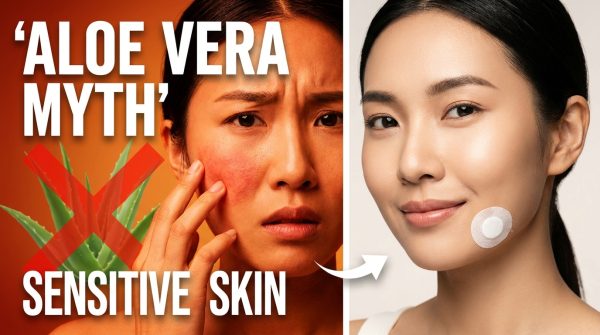
- Aloe can feel genuinely soothing on sensitive or heat-stressed skin, but the evidence is mixed and depends heavily on the formula (and what else is in it).
- “Natural” doesn’t mean “non-allergenic”—topical aloe can still trigger irritation or allergic contact dermatitis, so patch testing is worth the small effort.
- Aloe is an optional *adjunct* for mild irritation and minor superficial burns—not a replacement for sunscreen, burn care, or medical assessment when symptoms are severe.
Introduction
You know that moment when you step off the MRT or out of a Grab in Singapore—heat hitting your face like a wall, mask friction along your cheeks, and your skin feeling weirdly tight *and* sweaty at the same time? Or when you’ve walked to lunch under blazing sun and your shoulders feel hot, tender, and a little “angry”?
That’s usually when aloe vera enters the chat.
Aloe has a strong reputation for *soothing irritated skin*—especially after sun exposure. And to be fair, it often does feel cooling and comforting on application. But here’s the thing: “feels good” isn’t the same as “proven to heal,” and aloe products vary wildly. Some are beautifully simple. Others are loaded with fragrance, alcohol, menthol, dyes, or extra botanicals that can make sensitive skin even more reactive.
This guide breaks down aloe vera cream benefits with realistic expectations: when it’s worth trying, when it’s not enough (and might delay proper care), and exactly how to patch test aloe at home so you don’t accidentally turn a mild irritation into a full-blown rash.
—
What aloe vera can (and can’t) do for sensitive skin

Why aloe feels soothing: cooling + moisture support (what we know)
Aloe vera (often listed as *Aloe barbadensis* in ingredient lists) is mostly water plus a mix of polysaccharides and other plant compounds. When you apply an aloe gel or cream, a few practical things can happen:
- Evaporative cooling: Water-based products can feel instantly cooling as they evaporate.
- Humectant support (depending on the formula): Many aloe creams also include humectants like glycerin or butylene glycol that pull water into the upper skin layers, which can reduce that tight, papery feeling.
- A “comfort layer” effect: Even without being a heavy occlusive, a well-formulated aloe product can make skin feel less raw—especially if your barrier is mildly stressed from heat, shaving, or friction.
NCCIH (NIH’s National Center for Complementary and Integrative Health) summarises that topical aloe gel is generally well tolerated, but occasional burning, itching, rash, and eczema have been reported. (nccih.nih.gov)
What the research actually shows: mixed results and why products differ
This is where aloe gets tricky: the word “aloe” on a label doesn’t tell you *which* aloe preparation is used, how it was processed, how much is in the product, or what else is included.
NCCIH notes that clinical research suggests topical aloe gel *may* speed burn healing and reduce burn-related pain, but also emphasises that for many uses there isn’t enough reliable information to be confident. (nccih.nih.gov)
Systematic reviews have also been cautious. A Cochrane review (archived in PubMed) evaluating aloe-derived products for acute and chronic wounds found the overall evidence base limited and the included trials often small or at risk of bias—so aloe can’t be treated as a guaranteed healer. (pubmed.ncbi.nlm.nih.gov)
And then there’s the real-world formula issue: an aloe gel that’s basically aloe + preservative is one experience; an aloe “after-sun” gel with alcohol and fragrance is a totally different experience.
Bottom line: where aloe is a helpful adjunct vs where it’s not enough
Aloe can be a reasonable add-on for:
- mild, temporary irritation (heat, friction, shaving, mask rub)
- “sun-exposed but not burned” discomfort
- dry or tight feeling skin when paired with a proper moisturiser
Aloe is not enough (and shouldn’t be your main plan) for:
- significant sunburn with blistering
- worsening, weeping, or infected rashes
- chronic inflammatory skin diseases where you need diagnosis and a long-term strategy
If you take only one idea from this section, let it be this: aloe is a comfort tool, not a cure-all.
—
Aloe vera cream benefits (and limits): what’s most realistic for sensitive skin
After sun exposure: soothing discomfort vs treating sunburn damage
Let’s be honest: aloe is popular because it *feels* good after sun. But here’s the distinction that matters:
- Sun-exposed: skin feels warm, slightly tight, maybe a bit pink, but no significant pain.
- Sunburned: skin is painful/tender, clearly red (or noticeably inflamed even if redness is harder to see), and may later blister or peel.
For the first category, aloe can be a pleasant part of your routine—especially chilled (more on that later). For true sunburn, aloe might still be soothing, but it’s not “repairing the damage” in a way that replaces basic burn care or medical advice.
Also: aloe is not UV protection. You still need sunscreen and protective clothing the next day, even if aloe makes you feel “back to normal” quickly.
Minor, superficial burns: where some studies suggest faster healing (but not guaranteed)
For *minor* superficial burns, the research is mixed. NCCIH notes clinical research suggesting topical aloe gel may speed burn healing and reduce pain. (nccih.nih.gov)
But the Cochrane review found that higher-quality evidence is lacking overall, and some trials showed no advantage or had major limitations. (pubmed.ncbi.nlm.nih.gov)
So the most honest framing is:
- aloe may help *some people* with *some minor burns*,
- but it’s not a substitute for standard wound care,
- and you shouldn’t push through worsening symptoms just because the product is “natural.”
Dry, irritated, or chafed skin: moisturising + barrier support roles
Aloe *by itself* can be too light for dry, sensitive skin—especially if your barrier is compromised. The best results usually happen when aloe is part of a formula that also includes:
- humectants (e.g., glycerin, hyaluronic acid)
- barrier-supporting ingredients (e.g., niacinamide, panthenol)
- minimal fragrance and low “extra botanicals”
For example, Nano Singapore’s Aloe Vera Cream – 50g lists a water-and-humectant base (including glycerin and multiple hyaluronate forms), plus niacinamide, panthenol (vitamin B5), and centella—ingredients commonly used to support hydration and barrier comfort. (nanosingaporeshop.com)
That said, sensitive skin is personal. Even a “gentle” cream can include potential triggers (like certain plant extracts or dyes), so you still want to patch test.
Post-shave or mask-related irritation: when it may calm stinging (and when it won’t)
Shaving irritation and mask friction are often a mix of:
- micro-inflammation from friction,
- barrier disruption,
- and sometimes a reaction to fragrance, essential oils, or harsh cleansers.
Aloe can help *if* the product is bland and hydrating. But if your “aloe gel” contains alcohol, menthol, or heavy fragrance, it can sting like crazy—and you’ll think “I’m allergic to aloe,” when you might actually be reacting to the *rest* of the formula.
A quick comparison to make choosing easier
Different skin situations call for different textures and ingredient profiles. Here’s a practical way to compare options—especially if you’re trying to build a *fragrance free skincare* routine.
| Option | Key benefits | Best for | Notes for sensitive skin |
|---|---|---|---|
| Simple aloe gel (minimal ingredients) | Light hydration, quick cooling feel | Oily/combination skin; “hot face” days; layering under moisturiser | Check for alcohol, fragrance, menthol; gels can feel drying if used alone in air-con |
| Aloe-based cream (aloe + humectants + barrier helpers) | More lasting comfort; supports moisturiser role | Dry, tight, or mildly compromised barrier; post-shave; mask friction | Patch test because creams may include botanicals/preservatives; look for glycerin/panthenol/niacinamide |
| Bland barrier moisturiser (no aloe) | Stronger barrier support; fewer “plant” variables | Reactive eczema-prone skin; frequent rashes | Often a safer baseline if you’re sensitised to botanicals |
| Example: Nano Singapore Aloe Vera Cream (aloe leaf water + glycerin + hyaluronates + niacinamide + panthenol) | Hydration + barrier-comfort ingredients in one product | People who want aloe “soothing” feel but need more than a gel | Still patch test—sensitive skin can react to any formula, especially if you’re highly reactive (nanosingaporeshop.com) |
Interpret the table like a decision shortcut: if your skin is merely hot and uncomfortable, a simple gel may be enough; if it’s tight, flaky, or easily irritated, you’ll usually do better with a cream or a bland barrier moisturiser. And if you’ve reacted to botanicals before, start with the lowest-variable option and introduce aloe later (after patch testing).
—
Patch testing, allergy risk, and a Singapore-friendly label checklist (plus safe use)
Aloe allergy and irritation: “natural” can still trigger dermatitis
Aloe is often described as gentle, and it often is. But “often” isn’t “always.”
NCCIH notes topical aloe is generally well tolerated, but there are occasional reports of burning, itching, rash, and eczema. (nccih.nih.gov)
An NCBI Bookshelf review chapter also describes allergic reactions and reports that topical aloe gel has resulted in contact dermatitis in case reports, and cautions that people with allergy to plants in the Liliaceae family (commonly listed as garlic, onions, tulips) should avoid aloe preparations. (ncbi.nlm.nih.gov)
So if you’re thinking, “But my skin reacts to everything—should I even try aloe?” The answer is: yes, you can try—but do it like a cautious scientist, not like a desperate person slathering on hope.
Irritant vs allergic contact dermatitis: how to tell the difference
These two get confused all the time:
- Irritant contact dermatitis (ICD): more “chemical burn” vibes. Often stings or burns quickly. Usually stays where you applied it.
- Allergic contact dermatitis (ACD): immune reaction. Often shows up later (24–72 hours or more). Usually itches more, and can spread beyond the exact application site.
DermNet’s open application testing guidance highlights this timing difference clearly: immediate irritation is more consistent with irritant dermatitis, whereas allergic reactions are often delayed by days. (dermnetnz.org)
Who’s at higher risk
You’ll want to be extra careful if you:
- have eczema or a history of “mystery rashes”
- react to multiple botanicals or essential oils
- have known plant sensitivities (including the garlic/onion/tulip cluster mentioned in the NCBI Bookshelf review) (ncbi.nlm.nih.gov)
- are patch-test positive to fragrance or preservatives (common in the real world)
Common formula triggers that people blame on “aloe”
A lot of aloe products are marketed as calming, yet contain classic sensitizers/irritants such as:
- fragrance/parfum
- essential oils
- denatured alcohol
- menthol/camphor
- “botanical cocktails” (lots of plant extracts in one jar)
If you’re trying to protect sensitive skin, fewer variables is usually smarter.
How to patch test aloe vera gel/cream at home (step-by-step)
If you’ve never patch tested before, this can sound intimidating. It’s not. It’s basically a small, controlled trial on a tiny area—so your whole face doesn’t become the test site.
Important note: Home patch testing can reduce risk, but it can’t guarantee you’ll never react (especially if you later use the product more often, on thinner facial skin, or under heat/sweat).
Step 1: Choose the right test area
The inner forearm is common, but it’s not always the best “match” for facial sensitivity. A more face-relevant spot (while still being discreet) can be:
- behind the ear
- along the side of the neck (avoid if you shave there and get ingrowns)
- upper inner arm (less friction)
If you know your face is dramatically more reactive than your body, consider testing closer to the face (behind ear) first.
Step 2: Use a small amount, consistently
- Apply a pea-sized amount in a thin layer to a coin-sized area.
- Don’t apply other active products (acids/retinoids/benzoyl peroxide) on that test spot.
- Avoid doing this test right after a hot shower, workout, or sauna.
Step 3: Follow a 48–96 hour schedule (the “delayed reaction” window)
A practical timeline many dermatology resources support is to check not just immediately, but over days—because allergic reactions can be delayed.
A simple way to do it:
- 30 minutes: Any intense burning, swelling, or hives? Wash off and stop.
- 24 hours: Look for itching, redness, small bumps.
- 48 hours: Delayed reactions often declare themselves here.
- Up to 96 hours: Some reactions are slower—especially on sensitive, reactive skin.
DermNet describes open application testing (ROAT) and notes that delayed allergic reactions may only become evident several days after application. (dermnetnz.org)
Step 4: How to interpret “mild tingling” vs “stop now”
- Mild cooling sensation (especially with a chilled product) can be normal.
- Tingling that fades quickly might be okay—but watch it closely.
- Burning, increasing itch, swelling, hives, or a rash that grows is a stop sign.
If you react:
1. Wash off with lukewarm water and a gentle cleanser.
2. Stop the product entirely.
3. Keep the area bland (simple moisturiser only).
4. Seek medical advice urgently if you have facial swelling, widespread hives, or breathing symptoms.
How to choose an aloe vera cream in Singapore: a label checklist that actually helps
Standing in Watsons or scrolling online, it’s easy to get pulled into “99% aloe” claims. But sensitive skin doesn’t care about marketing. It cares about *ingredients, concentration, and irritant load.*
Here’s a practical checklist.
Gel vs cream vs lotion: which is better for sensitive or dry skin?
- Gel: best for oily skin or when you want a light feel. Can be drying if used alone in air-con.
- Cream: better for dry or easily irritated skin because it usually contains more humectants/emollients.
- Lotion: middle ground; can be great for body use, especially if you hate stickiness in humidity.
If you’re chasing aloe vera cream benefits specifically for dryness or tightness, a cream is often the more comfortable choice.
Ingredient order basics (why placement matters)
In most regions, ingredients are listed from highest to lowest (until ~1%, after which order may vary). That means:
- If aloe is listed near the top, it’s likely a meaningful base ingredient.
- If it’s near the end, it may be more “label aloe” than functional aloe.
For example, Nano Singapore’s Aloe Vera Cream lists *Aqua* and *Aloe Barbadensis Leaf Water* early, followed by multiple humectants (glycerin, glycols) and hyaluronic acid-related ingredients—consistent with a hydration-focused formula. (nanosingaporeshop.com)
Look for: minimal ingredients + barrier helpers
Green flags for *moisturiser for sensitive skin* shoppers:
- glycerin
- panthenol (vitamin B5)
- niacinamide
- ceramides (in some products)
- simple, boring formulas (boring is good when your skin is dramatic)
Be cautious with: “cooling” additives and scent
Sensitive-skin red flags:
- denatured alcohol high up the list
- fragrance/parfum
- menthol/camphor
- lots of essential oils
- long lists of plant extracts (harder to identify the culprit if you react)
Also note: some formulas include botanical extracts (even if they’re not “fragrance” per se). If you’re highly reactive, patch test is non-negotiable.
Packaging + stability: pumps/tubes beat open jars
Aloe-heavy, water-based products need preservation to avoid contamination. Packaging that limits repeated finger-dipping (pump/tube) can be more hygienic than jars—especially in humid climates where bathrooms can be warm.
How to use aloe safely for sun and irritation (Singapore climate edition)
Singapore adds a few real-life variables: heat, humidity, friction, sweat, and year-round UV. Your skin routine needs to work with those, not fight them.
For “sun-exposed but not burned” skin
Try this simple routine:
1. Cool down first (shade, cool shower—not icy).
2. Apply a bland moisturiser.
3. Optional: apply a thin layer of patch-tested aloe cream on top if it feels comforting.
If you apply aloe first and it’s too watery, it may evaporate quickly and leave you feeling dry again—so layering matters.
For mild sunburn: aloe is optional, cooling is essential
Core steps:
- cool compresses
- gentle hydration (drink water)
- avoid scrubbing and hot showers
- keep skincare bland
Aloe can be added if you tolerate it, but it’s not the “main treatment.”
If sunburn is severe, Mayo Clinic lists clear reasons to seek care—like large blisters, blisters on face/hands/genitals, signs of infection, confusion, dehydration, or fever over 103°F (39.4°C) with vomiting. (mayoclinic.org)
Don’t skip sunscreen: aloe is not UV protection
Aloe won’t prevent tanning, pigmentation, or DNA damage. It doesn’t replace SPF. Treat it like a comfort product, not a shield.
Do’s and don’ts in humidity
- Do use thin layers (too much product can feel sticky and increase friction).
- Do let each layer set before adding another.
- Don’t occlude heavily right before you go out to sweat—trapped sweat + friction can irritate.
- Don’t rub aggressively when reapplying; press and smooth gently.
Combining with actives (retinoids, acids, benzoyl peroxide)
If your skin is already irritated:
- pause strong actives for a few days
- focus on bland moisturiser + sun protection
- reintroduce actives slowly (every other night, then build)
Aloe can sit in the “comfort” slot during this reset—*if* it’s patch-tested and doesn’t sting.
Topical vs oral aloe: don’t mix up the risks
This article is about topical aloe vera cream benefits, but people often ask: “Should I drink aloe for my skin?”
Be careful: oral aloe is a different category with different risks. NCCIH warns that oral aloe latex can cause abdominal pain, cramps, and diarrhoea, and that oral consumption of aloe leaf extracts has been linked to cases of acute hepatitis. (nccih.nih.gov)
So if you’re thinking about ingesting aloe “for glow,” that’s a clinician conversation—not a casual skincare upgrade.
Buyer guidance: choosing supplements to support skin (without getting fooled by hype)
Sometimes, people like to support skin from the inside too—especially if they’re dealing with frequent barrier stress, sun exposure, or slow healing. This is where it helps to shop with a bit of label literacy.
If you prefer to buy supplements online, here’s what to look for in general (whether it’s Nano Singapore or any brand):
- Check the form and dose (don’t guess): “Zinc” on the front label isn’t enough—look for elemental amounts on the Supplement Facts panel. NIH’s Office of Dietary Supplements notes that supplement labels declare elemental zinc, not the full compound weight. (ods.od.nih.gov)
- Avoid megadosing as a default: More isn’t automatically better, and high-dose single nutrients can create imbalances.
- Look for quality signals: clear ingredient list, sensible dosing, and manufacturing/quality standards that are transparent.
- Be wary of skin claims that sound medical: supplements aren’t substitutes for diagnosing eczema, infection, or allergic dermatitis.
This isn’t about turning skincare into a supplement project. It’s just a reminder that *if* you go there, go there thoughtfully.
When to see a GP or dermatologist (red flags)
Don’t wait it out if you notice:
- severe pain, fever, confusion, dehydration, or extensive blistering after sun exposure (mayoclinic.org)
- spreading rash, facial swelling, hives, or breathing symptoms (urgent)
- signs of infection: warmth, pus, streaking redness (mayoclinic.org)
- dermatitis that persists even after stopping all new products (you may need formal patch testing)
A clinic can help you figure out whether it’s eczema, allergic contact dermatitis, fungal issues, bacterial infection, or something else entirely—because the treatment approach changes depending on the diagnosis.
—
Conclusion
Aloe can be a genuinely useful “comfort ingredient” for sensitive skin—especially in Singapore, where heat, humidity, mask friction, and year-round UV exposure keep skin on its toes. The most realistic aloe vera cream benefits are about *soothing and supporting hydration*, not magically reversing sun damage or curing chronic skin conditions.
The two habits that make aloe safer and more effective are simple: choose a formula with fewer irritants, and patch test before you commit—because even well-tolerated ingredients can trigger reactions in the wrong person.
If you’re exploring gentle options and want a convenient place to browse, you can always buy supplements online as part of a broader, skin-smart wellness routine.
Frequently Asked Questions
FAQ 1
Can aloe replace moisturiser?
Not usually. Aloe gels are often too light to act as a stand-alone moisturiser for dry or sensitive skin. Many people do better layering: moisturiser first, then a thin layer of aloe (if tolerated), or choosing an aloe *cream* that already includes humectants and barrier-support ingredients.
FAQ 2
Is “99% aloe” always better?
No. High aloe percentage doesn’t guarantee low irritation, good preservation, or a sensitive-skin-friendly formula. The full ingredient list matters more than the headline number—especially for fragrance, alcohol, menthol, and extra botanicals.
FAQ 3
Can I use aloe every day?
If you’ve patch tested and your skin stays calm, daily use is often fine. But if you notice cumulative dryness, stinging, or a delayed itchy rash, stop—daily exposure can sometimes reveal sensitivities that weren’t obvious on day one.
FAQ 4
Can children use aloe gel?
Sometimes, but be cautious: children’s skin can be more reactive, and many aloe products contain fragrance or alcohol. For kids, choose simple formulas, avoid “cooling” additives, and consider checking with a pharmacist or doctor—especially if the skin is broken or blistered.
FAQ 5
Can aloe help with acne or scars?
Aloe may feel calming on irritated acne-prone skin, but it’s not a proven primary acne treatment, and it won’t reliably erase scars. If acne is persistent or scarring, it’s worth using evidence-based options (like benzoyl peroxide or retinoids) with proper guidance—and keeping aloe as a supportive, non-irritating layer if it suits you.
References
- https://www.nccih.nih.gov/health/aloe-vera?nav=li
- https://pubmed.ncbi.nlm.nih.gov/22336851/
- https://www.ncbi.nlm.nih.gov/books/NBK92765/
- https://dermnetnz.org/topics/open-application-test
- https://www.mayoclinic.org/diseases-conditions/sunburn/symptoms-causes/syc-20355922?sf212899180=1
Disclaimer
All the content on this blog, including medical opinion and any other health-related information, is solely to provide information only. Any information/statements on this blog are not intended to diagnose, treat, cure or prevent any disease, and should NOT be a substitute for health and medical advice that can be provided by your own physician/medical doctor.
We at Nano Singapore Shop encourage you to consult a doctor before making any health or diet changes, especially any changes related to a specific diagnosis or condition.
