




Key Takeaways
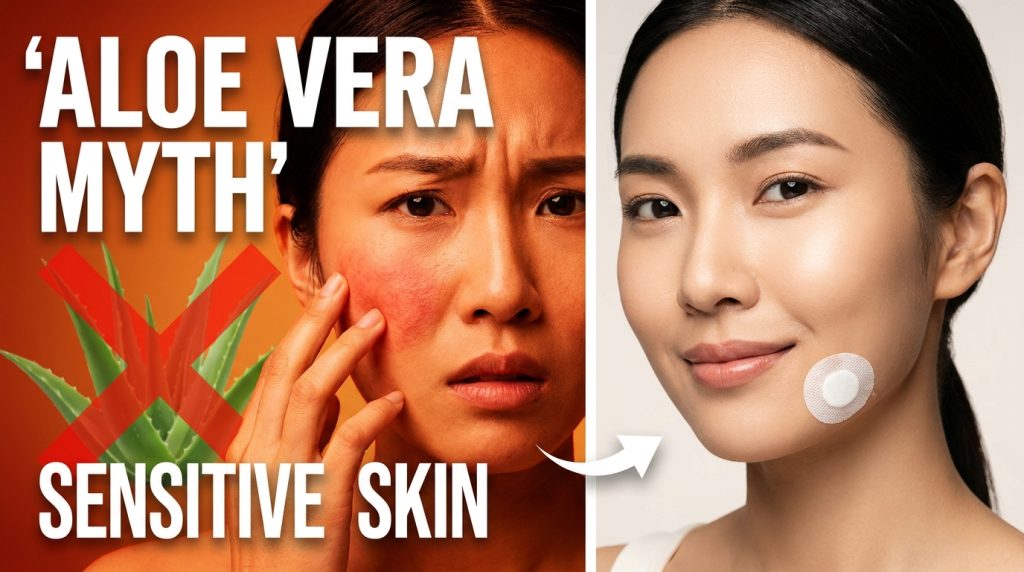
- Aloe can feel genuinely soothing for *some* types of irritation (think mild after-sun tightness or superficial redness), but it won’t “fix” every cause of sensitive skin—and sometimes it can trigger a rash.
- The *formula* matters as much as the plant: alcohol, fragrance, essential oils, and even extra botanicals can turn a “calming” aloe product into a sting-fest, especially in Singapore’s heat and humidity.
- Patch testing the *finished product* for 48–96 hours is your best low-effort, high-payoff step to reduce the risk of allergic contact dermatitis or irritation.
Introduction
You know that moment when you get home after a sunny commute—or a weekend at Sentosa—and your skin feels a bit… angry? Not dramatic, not a medical emergency, just that uncomfortable mix of warmth, tightness, and “please don’t touch me.”
That’s when many of us reach for aloe. And honestly, it makes sense: aloe vera has a long-standing reputation for soothing irritated skin, and plenty of people search “aloe vera cream benefits” hoping for something gentle enough for sensitive skin.
Here’s the thing, though. Aloe can be helpful, but it’s not a magic eraser. “Sensitive skin” is also a catch-all phrase that can hide very different problems—simple irritation, an allergy, an eczema flare, even infection. And to make it more complicated, aloe products can *also* cause burning, stinging, or allergic contact dermatitis in some people, even though they’re “natural.” The National Center for Complementary and Integrative Health (NCCIH) notes occasional reports of topical side effects like burning, itching, rash, and eczema-like reactions. https://www.nccih.nih.gov/health/aloe-vera?nav=li
So this guide is about using aloe wisely—especially in Singapore’s year-round UV exposure and humidity—so you can get the comfort without the accidental flare.
What this guide covers (and who aloe vera is—and isn’t—for)
Who typically searches ‘aloe vera cream benefits’ in Singapore
If you’re reading this from Singapore, you’re probably in one (or several) of these groups:
- Outdoor people: runners, cyclists, footballers, hikers, beach-goers—anyone who gets regular sun exposure even with sunscreen.
- Office + air-con skin: your face is oily by lunch, but your cheeks feel tight by 4pm. Classic.
- “My skin reacts to everything” shoppers: you’ve tried five “gentle” products in two months, and now you’re suspicious of all skincare (fair).
- Post-procedure / post-actives users: maybe you overdid a retinoid, acids, benzoyl peroxide, or you’re recovering from a facial and your barrier feels fragile.
Aloe can sometimes help in these situations—but *only* if the underlying issue is compatible with what aloe can realistically do (hydration + a cooling feel + possible mild anti-inflammatory effects). It’s not a substitute for diagnosis or medical treatment.
What ‘sensitive skin’ can mean (irritated vs allergic vs eczema)
“Sensitivity” is a sensation, not a diagnosis. And different causes behave differently:
- Irritant reaction (irritant contact dermatitis)
Often stings or burns *quickly* after you apply something. Common triggers: harsh cleansers, over-exfoliating, alcohol-heavy gels, sweating under occlusion, friction, hot water.
- Allergic contact dermatitis (a delayed allergy)
Often shows up hours to days later, tends to be itchier than painful, and can spread beyond the application area. Patch testing in a clinic is the gold-standard diagnostic tool for allergic contact dermatitis, and reactions are typically read over multiple days (often at 48 hours and again later). https://dermnetnz.org/topics/patch-tests https://www.aad.org/public/diseases/eczema/types/contact-dermatitis/patch-testing-rash
- Eczema (atopic dermatitis) flare
Usually recurring, often dry/scaly patches, very itchy, sometimes with a personal or family history of eczema/allergies/asthma. Aloe might feel nice, but it may not be enough on its own.
Why this matters: aloe that feels soothing for irritation can still be a bad idea for an allergy (you might be reacting to aloe itself, or the preservatives/fragrance/botanicals in the product).
Quick takeaway: aloe can soothe, but it won’t fix every trigger
Think of aloe as a comfort tool, not a universal solution.
Aloe is more likely to help when:
- the skin is mildly irritated, warm, tight, or dry
- the barrier just needs support and time
- you’re using a simple, well-formulated product and applying it correctly
Aloe is less likely to help (and can backfire) when:
- there’s a true allergy to an ingredient
- the rash is infected, weeping, or spreading quickly
- you’re layering it with strong actives or applying it under heavy occlusion in humid heat
If you take only one idea from this entire article, let it be this: don’t judge aloe by the plant—judge it by the product and your skin’s pattern.
Aloe vera 101: what’s inside, and why it can feel soothing
Aloe gel vs aloe latex: important safety distinction (topical ≠ oral)
People say “aloe” like it’s one thing, but there are two very different parts of the leaf that matter:
- Aloe gel (inner leaf): the clear, slippery part commonly used in topical gels and creams.
- Aloe latex (from the outer leaf/rind): contains anthraquinones (like aloin) that can act as a stimulant laxative when taken orally.
NCCIH specifically highlights safety concerns with oral aloe latex (cramps, diarrhoea, medication interactions), and it’s a good reminder of a simple rule: topical aloe products are not meant to be ingested. https://www.nccih.nih.gov/health/aloe-vera?nav=li
So if you’re buying an aloe cream or gel for your skin, treat it like skincare—not something “edible because it’s natural.”
How aloe may support the skin barrier: hydration, cooling sensation, and inflammation pathways (what we know vs what’s marketing)
Why does aloe feel so good *when it does work*?
1. Cooling + water content
A lot of aloe products feel cooling because they’re water-based and evaporate slightly on skin. That can temporarily reduce the “heat” sensation after sun or friction.
2. Humectant-style hydration
Many aloe formulas also include classic humectants (like glycerin, glycols, hyaluronic acid). These pull water into the upper layers of skin, which can reduce tightness and make skin feel more comfortable.
3. Potential anti-inflammatory effects (but not guaranteed)
Aloe has been studied for skin conditions and wound healing, but overall evidence is mixed depending on what you’re treating and how strong the studies are. NCCIH notes aloe has been studied for burns and conditions like psoriasis, but the evidence across uses isn’t uniformly strong. https://www.nccih.nih.gov/health/aloe-vera?nav=li
A practical way to think about it:
- If your skin is irritated because it’s dry and barrier-stressed, hydration + a gentle formula can help a lot.
- If your skin is irritated because it’s allergic, infected, or being repeatedly triggered, aloe might feel nice for 20 minutes and then you’re back to square one (or worse).
Why product formulation matters more than the plant (preservatives, alcohol, fragrance, botanicals)
Let’s be honest: a product can say “ALOE” in giant letters on the front and still be a nightmare for sensitive skin.
Common “hidden” reasons an aloe product stings:
- Drying alcohols (often used for that fast-drying gel feel)
- Fragrance and essential oils (not always listed as “fragrance”—sometimes it’s a blend of botanicals)
- Too many plant extracts layered together (more potential allergens)
- Preservatives you personally react to (necessary in water-based products, especially in Singapore’s warm climate—but still a possible trigger)
- Colourants/dyes (occasionally irritating for very reactive skin)
This is where it’s useful to read ingredient lists rather than marketing claims.
For example, Nano Singapore’s Aloe Vera Cream – 50g is built as a hydration + barrier-support type of formula: it includes aloe leaf water alongside humectants (like glycerin and multiple hyaluronic-acid forms), and barrier-friendly ingredients such as niacinamide and panthenol (vitamin B5). It also includes preservatives (common in water-based creams), and it contains some additional botanical extracts (for instance, lavender flower extract), which may be fine for many people but is exactly the kind of detail a very reactive-skin person should notice before applying widely. https://nanosingaporeshop.com/products/aloe-vera-cream
No scare tactics here—just reality: sensitive-skin success is usually about how simple and compatible the whole formula is, not how “natural” it sounds.
When aloe vera helps (and when it doesn’t): real evidence, realistic expectations, and smart product choice
When aloe vera *can* help: the best-fit situations
1) Minor superficial burns and sunburn-like irritation (limits included)
Aloe is commonly used for sunburn, and some studies suggest aloe *may* support healing in certain wound contexts. NCCIH discusses aloe’s topical use for burns and notes it’s generally well tolerated, though side effects can occur. https://www.nccih.nih.gov/health/aloe-vera?nav=li
When we look at systematic reviews, the picture is mixed:
- An older Cochrane review (often cited via PubMed) has been interpreted as showing faster healing in some burn studies, but the trials varied widely and weren’t consistently high quality. https://pubmed.ncbi.nlm.nih.gov/17599779/
- A later Cochrane review update on aloe for acute and chronic wounds concludes there’s an absence of high-quality clinical trial evidence to support aloe topical agents or dressings as treatments for acute and chronic wounds, and highlights heterogeneity and risk of bias in available trials. https://www.cochrane.org/evidence/CD008762_aloe-vera-treating-acute-and-chronic-wounds
So what does that mean in normal-person language?
- For mild, superficial, “sunburn-like” irritation, aloe can be a reasonable comfort measure.
- For deep burns, extensive blistering, or very painful burns, don’t DIY it. Get medical assessment.
Also: aloe shouldn’t replace the basics that matter more for sunburn recovery—cooling the skin, avoiding further sun, gentle moisturising, and pain control if needed.
2) Dryness/tightness after sun, showering, or air-con
This is where aloe creams often shine—not because aloe is a miracle ingredient, but because many formulas pair aloe with humectants + barrier-supporting ingredients.
If your sensitive skin is mainly:
- tight after cleansing
- flaky around the mouth
- reactive when dehydrated
…a light aloe-based moisturiser can be a good fit.
The key is to keep your routine boring (in a good way): gentle cleanser, simple moisturiser, sunscreen in the morning.
3) Inflammatory skin conditions studied in trials (e.g., psoriasis): interesting, but not “proof for all sensitive skin”
A well-known double-blind trial of a 0.5% aloe vera extract cream in psoriasis vulgaris reported a large difference versus placebo in that study population (often quoted as 83.3% “cure” in the aloe group vs 6.6% placebo), with relatively low relapse reported over 12 months in that paper. https://pubmed.ncbi.nlm.nih.gov/8632075/
That’s intriguing—but two important cautions:
1. Psoriasis isn’t the same thing as “sensitive skin.”
Sensitive skin can be irritation, allergy, rosacea, eczema, barrier damage, and more.
2. One positive trial doesn’t guarantee your product will work (different formulations, different concentrations, different individuals).
So yes, aloe has signals of benefit in some inflammatory contexts. But it’s not a guaranteed fix for every rash.
When aloe vera doesn’t help (and can make things worse)
Allergic contact dermatitis and irritation: “natural” doesn’t mean risk-free
Aloe can cause problems in two main ways:
- Irritation: burning/stinging shortly after application (common if your barrier is compromised or the formula contains drying alcohols or other irritating components).
- Allergic contact dermatitis: an itchy rash that can appear hours to days later and may spread.
NCCIH lists occasional reports of burning, itching, rash, and eczema-like reactions with topical aloe. https://www.nccih.nih.gov/health/aloe-vera?nav=li
And there are published reports of allergic contact dermatitis to aloe vera in dermatology literature. https://pubmed.ncbi.nlm.nih.gov/15982220/
If you’ve ever had a “mystery rash” from skincare, this is why patch testing matters. You’re not being paranoid—you’re being efficient.
Red flags that suggest a different problem (eczema flare, infection, harsh actives, over-cleansing)
Aloe is unlikely to be enough (and might delay proper care) if you have:
- Weeping, crusting, or pus (possible infection)
- Rapid spreading redness or swelling
- Blisters that aren’t just mild sunburn
- Persistent rash that keeps returning in the same places (often suggests eczema or contact allergy)
- Face/eyelid involvement that keeps flaring (often contact dermatitis from fragrances, hair products, nail products, etc.)
Also worth saying: if you’re “treating” sensitive skin but still using a strong exfoliant, a foaming cleanser that squeaks, and a new serum every week… aloe is trying to bail out a sinking boat.
A quick comparison to help you choose (without overthinking it)
Different “aloe options” suit different people. After all, not everyone wants the same texture, and not everyone reacts to the same ingredients.
| Option | Key benefits | Best for | Notes (sensitive-skin cautions) |
|---|---|---|---|
| Simple aloe gel (minimal ingredients) | Cooling feel, light hydration | Oily skin in humidity; mild after-sun warmth | Watch for drying alcohol, fragrance, essential oils; gel can sting on compromised barrier |
| Aloe-based barrier cream (aloe + humectants + barrier helpers) | Hydration + reduced tightness; more cushion than gel | Air-con dryness; tight, dehydrated sensitive skin | Check for extra botanicals/dyes/preservatives you may react to; patch test first |
| Bland fragrance-free moisturiser (no botanicals; ceramides/petrolatum-based options) | Strong barrier support; often best tolerated | Very reactive skin; eczema-prone patterns | Texture may feel heavy in Singapore humidity; can be sweaty/occlusive for some |
| Example: Nano Singapore Aloe Vera Cream (aloe leaf water + glycerin + hyaluronic acids + niacinamide + panthenol) | Hydration + comfort-focused barrier support | People who want a moisturiser for sensitive-feeling dryness/tightness | Still patch test: contains preservatives and additional extracts (e.g., lavender flower extract) that very reactive skin may not love |
How to read this table: pick the simplest option that matches your problem. If your issue is heat + mild redness, a lightweight gel may be enough. If your issue is tightness and dehydration, a barrier-supporting cream tends to make more sense. If you’re truly reactive, “boring and fragrance-free” often wins.
And if you’re shopping while trying to be careful, it’s completely reasonable to prefer brands that show full ingredient lists clearly. If you want to see a concrete example of a barrier-support style aloe moisturiser, you can look at Nano Singapore’s Aloe Vera Cream product page and scan the ingredient sections (especially the soothing/barrier ingredients vs the “extras”). https://nanosingaporeshop.com/products/aloe-vera-cream
Singapore context: humidity, sweat, and occlusion—how they change aloe use
In Singapore, *how* you apply matters almost as much as *what* you apply.
Why sweat + occlusive layers can sting (and how to avoid it)
When you’re sweaty and warm, skin can feel prickly and reactive. If you apply product on top of sweat—or trap heat with a thick occlusive layer—you can get that “why does this burn?” sensation.
Try this instead:
- Cool first (cool shower, cool compress—not ice सीधे on skin)
- Pat skin dry
- Apply a thin layer of product
- Wait 5–10 minutes before adding anything heavier
After outdoor workouts, beaches, and commuting: a realistic after-sun routine
A simple routine that suits Singapore life:
1. Cool shower or cool compress
2. Gentle cleanse (no scrubs)
3. Thin layer of aloe gel/cream
4. If skin feels tight after 10–15 minutes, add a light moisturiser layer
5. The next morning: sunscreen (because after-sun without sun protection is like mopping while the tap is still running)
Air-con dryness vs outdoor heat: when gel textures help, when creams are better
- Gel: feels great in humidity, but may not be enough for dehydration-prone cheeks.
- Cream/lotion: better for tightness and barrier support, but apply thinly to avoid a sweaty, occluded feel.
Where not to apply
Unless a product is specifically designed for these areas, be cautious with:
- eyelids
- skin folds where sweat collects (sides of nose, under mask friction zones)
- broken skin or open wounds
- mucous membranes (inside nose, lips’ inner line, genital area)
If you’re prone to recurrent irritation in those zones, it’s often better to go with very plain, dermatologist-style barrier products and get evaluated for contact dermatitis triggers.
If your “sensitive skin” pattern keeps recurring, it can also be worth looking beyond skincare—sleep, stress, shaving habits, cleansing temperature, and even whether you’re repeatedly trialling new products. And if you’re exploring skin-health support from multiple angles, Nano Singapore’s broader skin-health range (supplements and topical options) is organised in one place here: https://nanosingaporeshop.com/collections/best-skin-supplements-for-skin-health
(Just keep expectations realistic: supplements can support nutrition, but they don’t replace diagnosing an allergy or treating eczema appropriately.)
How to patch test aloe vera products properly (step-by-step)
If you have sensitive skin, patch testing is one of the most practical habits you can build. It’s boring, it takes a few days, and it can save you weeks of irritation.
Why you must test the finished product (not raw aloe)
A lot of reactions people blame on “aloe” are actually reactions to:
- preservatives
- fragrance
- essential oils
- alcohol
- extra plant extracts
- dyes/colourants
So patch test the exact product you plan to use—not a fresh aloe leaf, not a different brand, not a “similar” gel.
Where to test: inner forearm vs behind ear (pros/cons)
Two common spots:
- Inner forearm
Pros: easy to watch, easy to photograph, less likely to be irritated by hair products
Cons: skin here can be tougher than face; may under-predict facial sensitivity
- Behind the ear / along jawline (not too close to hairline)
Pros: a bit closer to facial sensitivity
Cons: hair products can confuse results; sweat can affect it
If your face is the main issue, some people do *both*: forearm first (safer), then a small behind-ear test if the forearm is calm.
The 48–96 hour method (simple, realistic version)
Clinical patch testing is done differently in clinics, but for home product screening, a cautious approach is:
1. Day 0 (start):
Apply a pea-sized amount to a 2 cm × 2 cm area. Don’t rub aggressively.
2. Repeat 1–2 times daily for at least 48 hours, ideally up to 96 hours.
Allergic contact dermatitis reactions can be delayed, which is why patch tests are often read in the 48–96 hour window. https://dermnetnz.org/topics/patch-tests
3. Keep a quick record (notes app is fine):
– redness (none / mild / clear)
– itch (none / mild / intense)
– swelling
– bumps
– blisters
– warmth/burning
– does it spread beyond the test area?
4. Don’t “challenge” angry skin.
If it’s clearly worsening, stop. You don’t need to prove a point to your immune system.
How to interpret results: mild tingling vs true irritation vs allergy
- A few seconds of mild cooling/tingling can happen, especially on very dry skin. If it fades quickly and there’s no redness later, it may be fine.
- Persistent stinging/burning, increasing redness within minutes to hours suggests irritation.
- Itchy rash that appears later (often after a day or two), with bumps or spreading suggests possible allergy.
And one more nuance: in Singapore’s humidity, sweat can make a borderline product feel worse. If you only react when you’re hot/sweaty, that’s still a real data point—your routine has to work in your real life, not just in air-con.
What to do if you react: stop, simplify, and when to see a doctor in Singapore
If you react:
1. Stop the product immediately.
2. Simplify to the basics for a few days: gentle cleanser, bland moisturiser, sunscreen (if tolerated).
3. Avoid experimenting with new actives to “fix” the rash—this often prolongs it.
Seek urgent medical attention if you have:
- facial swelling (especially lips/eyes)
- trouble breathing
- widespread hives
- rapidly spreading rash
And see a GP/dermatologist soon if:
- the rash is persistent, weeping, blistering, or looks infected
- you keep getting “mystery” reactions and need proper patch testing to identify triggers
The American Academy of Dermatology also explains patch testing as a way to identify what’s causing allergic contact dermatitis—useful if you’re stuck in a cycle of recurring rashes. https://www.aad.org/public/diseases/eczema/types/contact-dermatitis/patch-testing-rash
Conclusion
Aloe can be a genuinely useful comfort ingredient for soothing irritated skin—especially mild after-sun warmth, tightness, and dehydration. But for sensitive skin, the win is rarely about aloe alone. It’s about choosing a simple formula, applying it in a way that makes sense in Singapore’s humidity, and taking allergic/irritant reactions seriously.
If your skin is repeatedly reactive, don’t keep product-hopping and hoping. Patch test, simplify, and consider getting assessed for eczema or contact dermatitis triggers—because the right answer might be “less,” not “more.”
If you’d like a convenient way to explore options and compare products at your own pace, you can buy supplements online
Frequently Asked Questions
FAQ 1
Is aloe vera good for eczema?
It can feel soothing for some people, but eczema is a chronic inflammatory condition and may need targeted treatment. If you’re flaring, patch test first and prioritise bland, fragrance-free barrier care. If it keeps recurring, see a clinician for an eczema plan.
FAQ 2
Can I use aloe every day?
Many people can, as long as the formula suits them. Daily use makes the most sense when aloe is part of a simple moisturiser routine for dryness/tightness. If you notice stinging, itching, or delayed rash, stop and reassess.
FAQ 3
Can aloe replace sunscreen or after-sun care?
No. Aloe can’t prevent UV damage, and it doesn’t replace sunscreen. Think of aloe as “comfort after exposure,” while sunscreen is “prevention before exposure.”
FAQ 4
Is pure aloe better than an aloe cream?
Not automatically. “Pure” gels can still contain alcohol, fragrance, or preservatives—and may be more drying than expected. Creams can be better for barrier support if they include humectants and soothing ingredients, but they also may contain extra botanicals that reactive skin dislikes.
FAQ 5
Can I apply aloe on an open wound or popped blister?
Avoid applying aloe products to open wounds, infected skin, or significant burns unless a clinician advises it. For popped blisters or deep burns, keep the area clean and protected and seek medical guidance—especially if there’s increasing pain, redness, swelling, or discharge.
References
- https://www.nccih.nih.gov/health/aloe-vera?nav=li
- https://www.cochrane.org/evidence/CD008762_aloe-vera-treating-acute-and-chronic-wounds
- https://pubmed.ncbi.nlm.nih.gov/17599779/
- https://pubmed.ncbi.nlm.nih.gov/8632075/
- https://pubmed.ncbi.nlm.nih.gov/15982220/
- https://dermnetnz.org/topics/patch-tests
- https://www.aad.org/public/diseases/eczema/types/contact-dermatitis/patch-testing-rash
- https://www.mayoclinic.org/drugs-supplements-aloe/art-20362267
Disclaimer
All the content on this blog, including medical opinion and any other health-related information, is solely to provide information only. Any information/statements on this blog are not intended to diagnose, treat, cure or prevent any disease, and should NOT be a substitute for health and medical advice that can be provided by your own physician/medical doctor.
We at Nano Singapore Shop encourage you to consult a doctor before making any health or diet changes, especially any changes related to a specific diagnosis or condition.
