
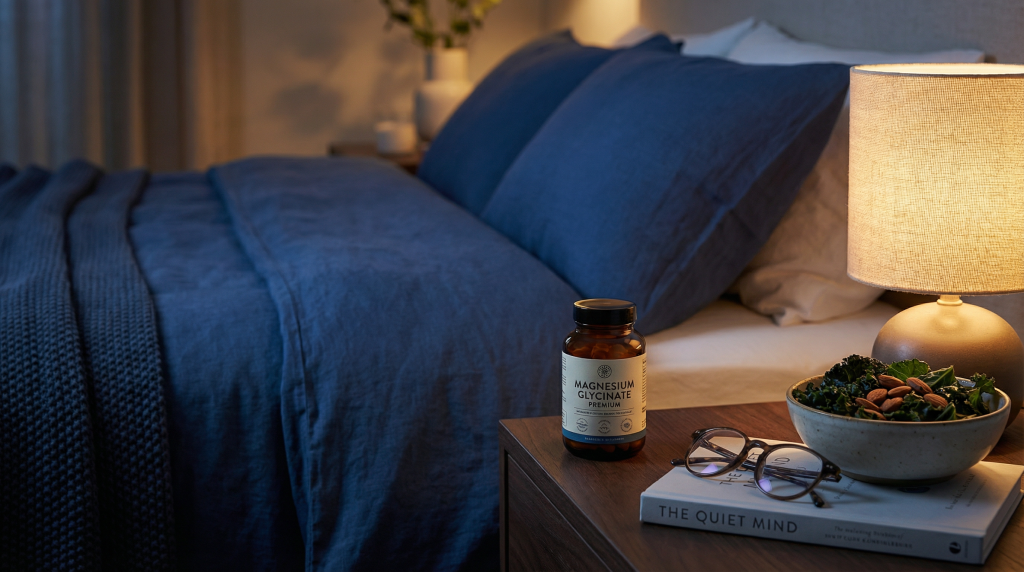


- Magnesium deficiency affects up to 50% of adults and is a leading cause of poor sleep quality, restlessness, and nighttime muscle cramps
- Magnesium glycinate is the most bioavailable form for sleep support, helping regulate neurotransmitters like GABA that calm the nervous system
- Combining magnesium with complementary supplements like ashwagandha and B-vitamins can create a powerful natural sleep support system
You know that feeling when you’re exhausted but can’t fall asleep? Or when you finally drift off, only to wake up at 3 AM with your mind racing? Here’s the thing—your body might be trying to tell you something. Before you blame stress or that late-afternoon coffee, consider this: you might be running low on magnesium.
Magnesium is one of those minerals we don’t think about until something goes wrong. It’s involved in over 300 biochemical reactions in your body, including the ones that help you relax and fall asleep. When you’re deficient (and studies suggest up to 50% of adults are), your sleep suffers. Let’s explore why magnesium matters so much for quality rest and what you can do about it.
Why Magnesium Is Your Sleep’s Best Friend
Think of magnesium as your body’s natural chill pill. It works by regulating neurotransmitters—the chemical messengers in your brain. Specifically, it activates GABA (gamma-aminobutyric acid), which is responsible for quieting down nerve activity and helping you transition from “go mode” to “rest mode.”
Without enough magnesium, your nervous system stays in overdrive. You might experience:
- Racing thoughts at bedtime
- Restless legs or muscle twitches
- Difficulty staying asleep
- Waking up feeling unrested
Research published in the Journal of Research in Medical Sciences found that magnesium supplementation significantly improved insomnia symptoms, sleep efficiency, and sleep time in older adults. But it’s not just older folks who benefit—anyone dealing with stress, intense workouts, or poor dietary habits can become magnesium-depleted.
The Magnesium-Sleep Connection: What Science Says
Your body’s internal clock (circadian rhythm) depends on magnesium to function properly. This mineral helps regulate melatonin production—the hormone that tells your body it’s time to sleep. When magnesium levels drop, melatonin production gets disrupted, and your sleep-wake cycle goes haywire.
But there’s more. Magnesium also helps manage your stress response by regulating cortisol levels. High cortisol at night? That’s a recipe for tossing and turning. By keeping cortisol in check, magnesium creates the hormonal environment your body needs for deep, restorative sleep.
If you’re dealing with sleep issues, Magnesium Glycinate Extreme from Nano Singapore offers the gold standard in magnesium supplementation. Unlike other forms that can cause digestive upset, magnesium glycinate is gentle on the stomach and has superior bioavailability—meaning your body actually absorbs and uses it effectively.

Not All Magnesium Is Created Equal
Here’s where things get interesting. You can’t just grab any magnesium supplement off the shelf and expect results. The form matters—a lot.
Magnesium oxide is cheap and commonly found in drugstores, but it has poor absorption (only about 4%). You’ll likely end up with an upset stomach before you see any sleep benefits.
Magnesium citrate absorbs better but has a laxative effect, which isn’t ideal when you’re trying to sleep through the night.
Magnesium glycinate is the winner for sleep support. It’s bound to glycine, an amino acid that itself has calming properties. This form is highly absorbable, gentle on digestion, and specifically supports relaxation and sleep quality.
| Feature | Nano Singapore (Premium) | Generic Competitors | The Result |
|---|---|---|---|
| Ingredient Purity | Pharmaceutical-grade magnesium glycinate with third-party testing for heavy metals and contaminants, sourced from GMP-certified facilities | Standard-grade magnesium with minimal testing, often contains fillers and additives | Cleaner, safer formula that delivers consistent results without unwanted side effects |
| Absorption Rate (Bioavailability) | Magnesium glycinate chelate form with 80-90% absorption rate, enhanced with glycine for dual calming benefits | Magnesium oxide or citrate with 4-30% absorption, often causes digestive discomfort | Superior absorption means you need less product for better results, with no stomach upset |
| Award-Winning Formula | Part of Nano Singapore’s 10+ industry award-winning product line, GMP-certified, internationally recognized for quality | Generic certifications or none, limited quality recognition | Proven excellence backed by industry validation and customer satisfaction |
| Value for Money | SGD 28.90 for 120 capsules of highly bioavailable magnesium glycinate (4-month supply at recommended dose) | Similar price but lower quality ingredients with poor absorption rates | Better results per dollar—higher absorption means more effective sleep support with less waste |
Building Your Natural Sleep Support System
While magnesium is powerful on its own, combining it with complementary supplements can create an even more effective sleep support system. Many people find that pairing magnesium with adaptogens and B-vitamins addresses multiple sleep disruptors at once.
Ashwagandha Extreme works beautifully alongside magnesium by targeting the stress response. This ancient adaptogenic herb helps regulate cortisol levels throughout the day, so by bedtime, your body’s naturally ready to wind down. If stress and anxiety are keeping you up at night, this combination can be a game-changer.
Don’t overlook the role of B-vitamins either. Vitamin B Complex supports your body’s energy production during the day and helps regulate neurotransmitters involved in mood and sleep. Vitamin B6, in particular, is essential for converting tryptophan into serotonin and then melatonin—your sleep hormone.
Here’s a simple approach:
- Morning: Take B-Complex to support daytime energy and mood
- Afternoon: Consider Ashwagandha to manage stress throughout the day
- Evening (1-2 hours before bed): Take Magnesium Glycinate to promote relaxation and prepare for sleep
Signs You Might Be Magnesium Deficient
How do you know if low magnesium is behind your sleep troubles? Look for these telltale signs:
- Muscle cramps or spasms, especially at night
- Eyelid twitches
- Fatigue despite adequate sleep
- Anxiety or irritability
- Difficulty concentrating
- Restless legs syndrome
- Irregular heartbeat
If several of these sound familiar, it’s worth considering magnesium supplementation. Certain factors increase your risk of deficiency, including chronic stress, intense exercise, high caffeine or alcohol intake, and digestive issues that affect nutrient absorption.

Making Magnesium Work for You
Supplementation is most effective when combined with lifestyle habits that support healthy sleep. Here are some practical tips:
- Timing matters: Take magnesium glycinate 1-2 hours before bed for optimal sleep support. This gives your body time to absorb it and start the relaxation process.
- Start low, go slow: Begin with 200-400mg and adjust based on how you feel. Most people find their sweet spot in this range.
- Create a wind-down routine: Pair your magnesium supplement with other relaxing activities—dim the lights, put away screens, try gentle stretching or reading.
- Watch your diet: While supplementation helps, also include magnesium-rich foods like leafy greens, nuts, seeds, and whole grains.
- Be patient: Unlike sleep medications that work immediately, magnesium builds up in your system. Give it 2-4 weeks to see the full benefits.
The Bottom Line on Magnesium and Sleep
If you’ve been struggling with sleep and can’t figure out why, magnesium deficiency might be the missing piece of the puzzle. This essential mineral plays a crucial role in calming your nervous system, regulating sleep hormones, and preparing your body for rest.
The key is choosing the right form—magnesium glycinate offers superior absorption and sleep-specific benefits without the digestive issues of other types. Combined with stress-management support from adaptogens and proper B-vitamin intake, you’re creating a comprehensive approach to better sleep.
Ready to finally get the rest you deserve? Explore premium sleep support supplements that work with your body’s natural rhythms. Whether you’re looking to buy supplements online for better sleep or comprehensive wellness support, choosing quality formulations makes all the difference in your results.
Frequently Asked Questions
-
How long does it take for magnesium to improve sleep?
Most people notice improvements within 2-4 weeks of consistent supplementation, though some experience benefits sooner. -
Can I take magnesium every night?
Yes, magnesium glycinate is safe for daily use and works best when taken consistently as part of your nightly routine. -
Will magnesium make me drowsy during the day?
No, magnesium promotes natural relaxation but doesn’t cause daytime drowsiness when taken in the evening as recommended. -
Can I take magnesium with other supplements?
Yes, magnesium pairs well with ashwagandha, B-vitamins, and most other supplements—just space calcium supplements 2 hours apart. -
What’s the difference between magnesium glycinate and other forms?
Magnesium glycinate has superior absorption (80-90%) and is gentle on digestion, making it ideal for sleep support without side effects.
